
What Are Depo-Provera Lawsuit Symptoms?
Depo-Provera lawsuits focus on women who developed meningioma brain or spinal tumors after using the birth control shot for a year or longer. These lawsuits claim that Pfizer, the drug’s manufacturer, failed to warn patients about the potential risks.
Because meningiomas grow slowly, symptoms may be mild or overlooked at first. Many women don’t realize they have a tumor until it becomes large enough to cause serious neurological issues.
“I was getting these really terrible headaches every day, and I’d get very lightheaded when I’d get up off the couch. My vision was getting blurry. My speech would slur at some point, and that’s when I would joke, ‘Oh, that’s my stupid brain tumor again’ — joking, having no idea.”
– Maria Menounos, TV Host & Reporter with a Meningioma
Pursuing a meningioma diagnosis is essential for both your health and your legal rights. In order to file a Depo shot lawsuit, you’ll need a confirmed meningioma diagnosis, which we can help link to your Depo-Provera use.
At Sokolove Law, our Depo-Provera attorneys have over 45 years of experience holding negligent pharmaceutical companies accountable for harming patients. Let us help you seek justice.
Get the Help You Deserve
Our attorneys may be able to help you file a Depo-Provera lawsuit and fight for compensation on your behalf. See if you qualify now.
Symptoms of a Brain Tumor from Depo-Provera
Depo-Provera tumors form in the protective layers of tissue surrounding the brain or spinal cord. They may press on nearby nerves or brain tissue, which can lead to cognitive, neurological, and behavioral changes.
These tumors often grow slowly, and their symptoms can develop gradually, making early detection challenging.
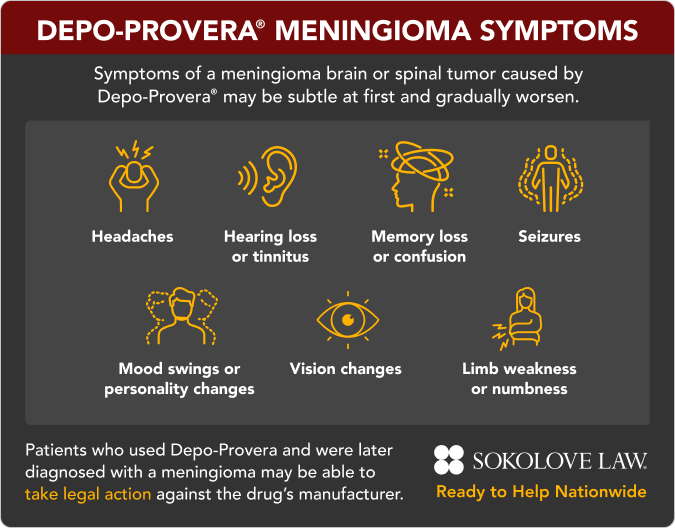
Symptoms of a brain tumor from Depo-Provera may include:
- Balance or coordination problems
- Difficulty speaking
- Headaches
- Hearing loss or ringing in the ears
- Memory loss or confusion
- Mood swings
- Muscle cramps
- Nausea or vomiting
- Personality changes
- Seizures
- Vision changes
- Weakness or numbness in the limbs
If you used the birth control shot and later developed Depo-Provera brain tumor symptoms, contact your doctor to see if you may be able to get tested for a meningoma. When detected early, tumors may be easier to manage, treat, or remove due to their smaller size.
If you are diagnosed with a meningioma after using the Depo shot, you may be eligible for compensation that we can fight for on your behalf.
Call (800) 995-1212 now to find out if you may qualify for a Depo-Provera lawsuit settlement. It costs nothing to speak with us.
Depo-Provera Spinal Tumor Symptoms
Spinal meningiomas are less common than brain tumors, making up around 10% of meningiomas. However, they can still occur after long-term Depo-Provera use. These tumors affect the spinal cord and surrounding nerves, leading to symptoms focused on movement and sensation.
Depo-Provera spinal tumor symptoms include:
- Back or neck pain that worsens over time
- Difficulty walking, balance issues, or frequent falls
- Loss of bladder or bowel control
- Muscle cramps or spasms
- Numbness, tingling, or weakness in the arms, hands, legs, or feet
“Across 50 studies, the most common presenting symptoms included motor dysfunction (92%), sensory dysfunction (78%), and pain (76%), as well as sequelae of spinal cord compression, like gait disturbance (42%) and bowel and bladder dysfunction (28%).”
– National Library of Medicine
The effects of a spinal meningioma can be serious: Approximately 21-53% of patients are unable to walk or move about independently at the time of their diagnosis.
Depo-Provera Tumor Symptoms
When patients using Depo-Provera develop tumors, symptoms typically reflect the area of the brain or spinal cord the tumor is pushing on.
Generally speaking, Depo-Provera tumor symptoms involve neurological changes, unexplained weight fluctuations, persistent headaches, vision disturbances, and localized pain or swelling, depending on the tumor’s location.
Because these symptoms often develop slowly, they may be mistaken for stress, aging, or other conditions.
Depo-Provera and Headaches
Regular headaches are a common sign of meningiomas linked to Depo-Provera, with around 77% of meningioma patients reporting headaches, according to Sage Journals.
These headaches are frequently described as pulsating or migraine-like. They can become more frequent and intense over time, and the pain may be worse in the morning, according to the Mayo Clinic.
Because headaches are common and linked to many everyday health issues, this Depo-Provera brain tumor symptom is often overlooked. Keeping a record of headache frequency, duration, and intensity can help doctors evaluate whether further testing is needed.
Depo-Provera Hearing Loss
Some women who develop meningiomas linked to Depo-Provera may experience ringing in the ears (tinnitus) or partial hearing loss due to the tumor’s effect on the inner ear or auditory nerve.
One meningioma patient with pulsatile tinnitus described the sound as “a heartbeat in one ear, which was noticeable when I was in a quiet room or after exercise.”
As the tumor grows, hearing loss may slowly become more noticeable or persistent. Tinnitus may worsen, or you might notice difficulty following conversations, especially in noisy environments.
Depo-Provera and Limb Numbness or Weakness
Depo-Provera brain tumors may press on areas of the brain that control movement and sensation, potentially causing weakness, numbness, or tingling in one arm, leg, or side of the body.
These symptoms often develop gradually and may be subtle at first, sometimes starting as mild clumsiness, difficulty gripping objects, or tingling sensations.
Pam, a meningioma survivor in Ohio, noted that her initial meningioma symptoms included “numbness and tingling sensations in my left foot and ankle.” As time went on, the tingling sensation would travel up her left leg and eventually into her arm, which “would feel lifeless and useless for a couple of minutes.”
Depo-Provera Memory Loss
When meningiomas impact the brain’s frontal lobes, patients may experience memory loss and confusion. Women with Depo-Provera brain tumors may also have difficulty concentrating on everyday tasks.
As the tumor grows, cognitive changes can become more pronounced. What started off as “forgetfulness” may begin affecting your daily life and performance at work. Over 20% of patients experienced memory changes, according to the Indian Journal of Neurosurgery.
"I worried about my memory so much that I went and got an MRI. And I found out I have a brain tumor.”
– Sheryl Crow, Singer with a Meningioma
Depo-Provera and Mood Swings
Meningiomas can press on areas of the brain that regulate emotions and behavior, including the frontal lobes. Women with Depo-Provera brain tumors may experience mood swings, irritability, anxiety, or depression.
In some cases, personality changes can also occur. Patients with meningiomas may become more withdrawn, impulsive, aggressive, or emotionally reactive.
Because mood and personality changes are common in everyday life, they are sometimes overlooked as potential warning signs of a brain tumor.
"I know how important it is to advocate for one's own health because people were like, 'You're just depressed,’” Grey's Anatomy actress Kate Walsh recalled. "I'm like, 'No, something's off.'"
Depo-Provera and Seizures
More than 33% of patients with meningioma brain tumors experience seizures, according to the National Library of Medicine. Seizures can be focal, affecting just one part of the brain, or generalized, impacting both sides of the brain.
In 20-50% of cases, seizures are the first symptom experienced by patients with meningiomas, according to MDPI.
Women who have taken Depo-Provera should be aware of symptoms like jerking movements, unusual sensations, loss of consciousness, or brief lapses in awareness, as these may be signs of a seizure.
Depo-Provera Vision Changes
Vision changes, like blurred or double vision, partial vision loss, or difficulty focusing, can occur if a meningioma affects the optic nerve or nearby regions.
Some women may first notice subtle issues, like difficulty reading or sensitivity to light, before more serious vision problems begin to develop.
In a study of 183 patients with intracranial meningiomas, 27.3% experienced visual changes, according to the Indian Journal of Neurosurgery.
Women who used Depo-Provera for a year or longer should pay attention to any new or unusual symptoms. Those diagnosed with a meningioma may be able to take legal action against the drug’s manufacturer for failing to warn of this risk.
Billions Recovered Nationwide
At Sokolove Law, we’ve recovered over $1.6 Billion for thousands of injured clients across the country. Let us get you the money you deserve.
What to Do If You Have Meningioma & Depo-Provera Symptoms
If you’ve received at least 4 Depo-Provera injections and begin experiencing symptoms that could be linked to a meningioma, it’s important to listen to your body and take any concerns seriously.
Early evaluation can help confirm whether a tumor is present and guide treatment decisions, potentially improving health outcomes.
If you have meningioma and Depo-Provera symptoms, it can help to:
- Closely track any changes to your health
- Make a doctor’s appointment to pursue a meningioma diagnosis
- Get treatment if recommended by your care team
- Reach out to a Depo-Provera lawyer for assistance
At Sokolove Law, we can help patients with meningiomas file a lawsuit against Pfizer and pursue compensation from a Depo-Provera settlement. This money can help pay for treatment costs, lost wages, and more.
If you’re concerned about Depo-Provera brain tumor symptoms, don’t wait to take action. Getting answers early can make a real difference for your health — and speaking with an experienced attorney can help you understand your legal options.
How Do I Know If My Meningioma Was Caused by Depo-Provera?
If you developed a meningioma after using Depo-Provera for a year or longer, it’s possible that the birth control shot contributed to your tumor — and our Depo-Provera attorneys can help you figure it out.
Recent studies have found that women who used Depo-Provera for a year or longer may face a 5 times greater risk of developing a meningioma compared to women who never used the drug.
This increased risk is linked to high doses of the synthetic hormone medroxyprogesterone acetate (MPA), the active ingredient in Depo-Provera. Meningiomas are hormone-sensitive tumors, meaning their growth can be influenced by hormone levels.
At Sokolove Law, our team can review your medical records and work with experts in the field to help build a strong case on your behalf.
Even if you took Depo-Provera years ago and were only recently diagnosed with a brain or spinal tumor, you may be eligible to take legal action against Pfizer.
Early Signs of Meningioma from Depo Shots
Meningiomas linked to Depo-Provera often grow slowly, so early symptoms can be subtle and easy to miss. However, early detection allows for timely evaluation and management.
Women who have used Depo-Provera for a year or longer should pay attention to any neurological, sensory, or cognitive changes.
Early Depo-Provera meningioma symptoms may include:
- Balance or coordination issues, like stumbling or losing your grip
- Fatigue or exhaustion
- Hearing changes or ringing in the ears
- Mild weakness, numbness, or tingling in the arms or legs
- Persistent or unusual headaches that differ from your normal pattern
- Subtle cognitive or personality changes, like confusion or mood swings
- Vision changes, like blurring or loss of sharpness
While symptoms usually appear later as the tumor grows, noticing these early warning signs and seeking prompt medical evaluation can help detect a meningioma before it causes more serious complications.
Depo Shot Meningioma Warning Signs
As meningiomas grow, they can press more on the brain or surrounding nerves, producing stronger and more noticeable symptoms. These warning signs indicate that the tumor may be progressing and require prompt medical attention.
Common warning signs of a Depo-Provera meningioma may include:
- Difficulty walking, balance issues, or frequent falls
- Nausea or vomiting that is persistent or unexplained
- Noticeable cognitive or personality changes, including confusion, memory loss, or mood swings
- Seizures or sudden involuntary movements
- Severe or worsening headaches
- Significant weakness, numbness, or tingling in the arms, legs, or face
- Vision loss or double vision that develops suddenly or worsens quickly
These warning signs suggest that the tumor may be growing or affecting critical brain areas. Seeking immediate evaluation from a neurologist or other medical professional is important to determine next steps, which may include imaging, treatment, or surgery.
Why Symptoms of a Depo-Provera Brain Tumor Matter
Recognizing the early symptoms of a Depo-Provera brain tumor can impact both your health and your legal rights. If you’ve used the Depo shot and are now experiencing symptoms, choosing to pursue a diagnosis can make a real difference.
Here’s why your Depo shot meningioma symptoms matter:
- Legal Action: Getting diagnosed with a meningioma means you may be able to file a Depo shot lawsuit and seek much-needed compensation during this difficult time.
- Long-Term Health: Symptoms can indicate that a tumor is growing or pressing on critical areas of the brain, which can lead to serious complications without timely medical intervention.
- Prevention: Taking your symptoms seriously and pursuing testing early can help prevent further tumor growth.
- Treatment: Early detection can expand your treatment options, including monitoring, surgery, and radiation therapy, and may improve your overall prognosis.
Once you receive a meningioma diagnosis, there’s only a limited amount of time to take legal action due to laws called statutes of limitations. Once the deadline in your case passes, you won’t be able to seek compensation again.
Over 3,099 Depo shot lawsuits have already been filed by women who developed meningiomas after using the birth control shot. Don’t miss out on the justice and compensation you deserve.
Sokolove Law: Fighting for Depo-Provera Victims Nationwide
At Sokolove Law, we’re committed to supporting women who used Depo-Provera and later developed a brain or spinal tumor. We have the resources and experience needed to stand up to powerful pharmaceutical companies like Pfizer and hold them accountable for harming patients.
Why choose our Depo-Provera lawyers?
- Ability to help families in all 50 states
- No upfront costs or hourly fees
- More than 45 years of litigation experience
- Over $1.6 Billion total secured for clients harmed by dangerous drugs and medical devices
"I finally reached a law firm that truly understands the gravity of damage done by the Depo manufacturer."
– Syble, Depo-Provera Victim & Firm Client
Call (800) 995-1212 now or fill out our contact form to find out if we may be able to help you fight for the justice and compensation you deserve.
Depo-Provera Lawsuit Symptoms for a Brain Tumor FAQs
Is Depo-Provera linked to brain tumors or meningiomas?
Yes. Women who have received at least 4 Depo-Provera injections are over 5 times more likely to develop meningioma brain or spinal tumors, according to the BMJ.
Pfizer, the drug’s manufacturer, reportedly knew about this risk but failed to warn patients in the United States.
Contact Sokolove Law now if you were diagnosed with a meningioma. You may be eligible for compensation from a Depo shot lawsuit.
What are Depo-Provera brain tumor symptoms?
Depo-Provera brain tumors, called meningiomas, can cause a variety of neurological issues based on the tumor’s size and location.
Depo-Provera brain tumor symptoms may include:
- Balance or coordination issues
- Cognitive or memory problems
- Headaches
- Hearing issues
- Mood or personality changes
- Seizures
- Vision issues
Because these tumors often grow slowly, their impact on your health may be subtle at first and can be easily overlooked. It’s important to report any Depo-Provera brain tumor symptoms to your doctor as soon as possible.
How do I know if my brain tumor is from Depo shots?
If you used Depo-Provera for a year or longer and were diagnosed with a meningioma brain tumor, the birth control shot may have played a role in its development. Meningiomas are hormone-sensitive tumors, and studies show long-term Depo-Provera use can increase the risk of these tumors.
At Sokolove Law, our team can review your medical history and pathology reports to determine if your tumor may be linked to Depo-Provera.
Even if you stopped using Depo-Provera years ago, you may still be eligible to file a lawsuit. Call (800) 995-1212 now for a free case review.
How serious is a meningioma?
The seriousness of a meningioma depends on its size, location, and growth rate. Most meningiomas are slow-growing and noncancerous, meaning they can often be monitored or treated successfully with surgery or radiation.
However, even benign tumors can become dangerous if they press on critical parts of the brain or spinal cord, leading to headaches, vision problems, seizures, or changes in behavior or memory.
While the majority of people with meningiomas have a good long-term outlook, the condition should never be ignored — and it’s important to seek out a diagnosis or treatment as soon as possible.
Can Depo-Provera cause seizures?
Women using Depo-Provera are at an increased risk of developing meningioma brain tumors, which can cause seizures. In fact, over one-third of meningioma patients experience seizures linked to their tumor, according to the National Library of Medicine.
Seizures can be a serious Depo-Provera brain tumor symptom. If you experienced a seizure after taking Depo-Provera, contact your doctor as soon as possible.
Do meningiomas cause headaches?
Yes. Headaches are a common symptom of meningiomas, though not all patients will experience them. Headaches typically occur when a meningioma tumor puts pressure on surrounding brain tissue, nerves, or blood vessels.
Over time, these headaches may become persistent and resemble migraines. Some patients report the headaches being worse in the morning or feeling different from their usual headaches.
How do you self-check for a brain tumor from Depo-Provera?
You can’t diagnose a brain tumor on your own, but you can monitor for early warning signs and be proactive about contacting your doctor with any concerns.
If you are experiencing Depo-Provera tumor symptoms, your doctor may recommend a neurological exam or medical imaging — like an MRI or CT scan — to confirm the presence of a brain tumor.
How long can you have a brain tumor without knowing?
It’s possible to have a brain tumor for years without knowing, especially if you aren’t experiencing significant symptoms. Since meningiomas often grow slowly, early warning signs can be subtle and attributed to everyday issues like stress.
Many people aren’t diagnosed until the tumor becomes large enough to cause neurological changes, like vision problems or seizures.
Can I live a normal life with a meningioma?
Many people with a meningioma can live a normal and active life, especially when the tumor is small, slow-growing, and properly managed. Because most meningiomas are benign, treatment often leads to excellent long-term outcomes.
Some patients may not even need surgery. If the tumor isn’t causing serious symptoms, doctors may choose to monitor the tumor with regular MRI scans to track any changes. With careful medical follow-up, many patients continue working, driving, and enjoying their usual activities without major limitations.
