
What Are Stage 3 Bedsores or Pressure Ulcers?
A stage 3 bedsore is a serious injury that forms when prolonged pressure cuts off blood flow to the skin and deeper tissue. Bedsores or pressure injuries progress through 4 stages, from mild redness to open wounds that can reach muscle or bone.
At bedsores stage 3, the sore has broken through the top layers of skin and into the fat below. It often looks like a deep crater with drainage or a strong odor and can quickly become life-threatening without urgent medical care.

“Severe bedsores are one of the clearest signs of nursing home neglect. These wounds take time to form and are almost always preventable with routine care.”
– Ricky LeBlanc, Managing Attorney of Sokolove Law
When a long-term care facility allows a resident to develop a stage 3 bedsore, it’s usually a sign of poor care or nursing home abuse. Families may be able to file a lawsuit to hold the facility accountable and pursue compensation.
At Sokolove Law, our nursing home neglect lawyers have over 45 years of experience helping families seek justice for preventable injuries in long-term care facilities. Contact us now to see if we may be able to help you.
Since 1979, our nursing home abuse lawyers have secured over $318 Million for clients nationwide.
Get a Free Case Review
Causes of Stage 3 Bedsores in Nursing Homes
Stage 3 bedsores are often caused by nursing home neglect. In most nursing homes, these wounds can be avoided through consistent, attentive care that maintains skin integrity and blood flow — but early warning signs are often ignored.
When staff members don't provide quality care to residents, small sores can worsen into serious injuries due to this neglect.
Common causes of stage 3 pressure ulcers in long-term care facilities include:
- Failure to follow care plans: Skipped repositioning, missed skin checks, and incomplete wound documentation allow small sores to worsen.
- Inadequate staffing or training: Overworked or untrained staff may miss early signs of redness or pressure damage.
- Infrequent repositioning: Residents left in one position for too long may lose blood flow to the skin, leading to tissue death.
- Malnutrition or dehydration: Without enough nutrients and fluids, the body cannot repair or protect skin tissue.
- Poor hygiene and moisture control: Damp bedding or soiled clothing can weaken skin and accelerate breakdown.
Nursing home staff members are expected to prevent these injuries through regular repositioning, clean bedding, and proper nutrition. Ignoring those responsibilities can have devastating results.
In one case, our attorneys secured $1.5 Million from a Minnesota nursing home lawsuit for a woman who developed advanced bedsores after caregivers failed to provide adequate care.
Families who suspect neglect can hold facilities accountable and help prevent others from being harmed.
Call (800) 995-1212 now to find out if you may be able to take legal action for a stage 3 bedsore. It costs nothing to speak with us.
Who’s Most at Risk of Stage 3 Bedsores in Nursing Homes?
Some nursing home residents are more likely to develop stage 3 bedsores when staff neglect basic movement, nutrition, and hygiene.
These injuries often affect older adults who depend on caregivers for daily needs. When those needs are ignored, it can be considered elder abuse and puts vulnerable residents at serious risk.
Nursing home residents at risk of a stage 3 pressure sore are those who:
- Spend long periods sitting or lying in one position without being moved
- Have dementia or other conditions that make it hard to feel or report pain
- Have fragile or thinning skin that breaks down easily
- Live with incontinence that keeps the skin moist and prone to infection
- Struggle to eat or drink enough to maintain proper nutrition and hydration
- Suffer from diabetes or circulation problems that slow blood flow and healing
Regular skin checks, repositioning, and proper wound-prevention protocols can stop these injuries before they begin. When care lapses, residents face unnecessary pain and serious health risks.
What Does a Stage 3 Bedsore Look Like?
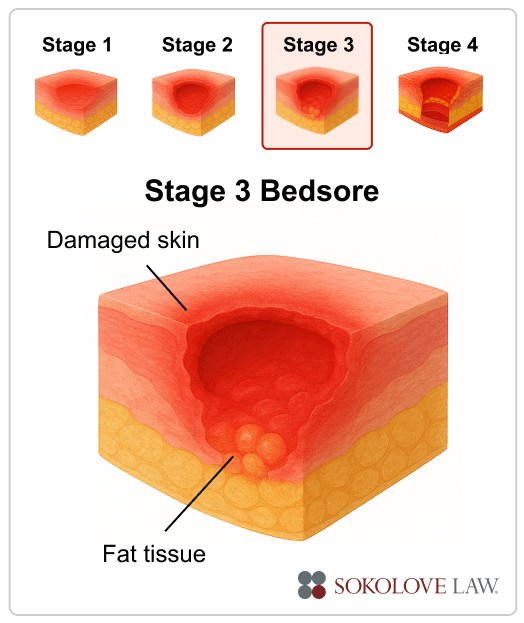
A stage 3 bedsore appears as a deep, open wound that has broken through the upper layers of skin and extended into the fat tissue below. The sore may show yellowish dead tissue, thick drainage, or red edges that signal inflammation.
Stage 3 bedsores most often form where the skin is thin and constant pressure restricts blood flow, like the tailbone, hips, heels, or shoulders.
These wounds typically show signs of tissue death and infection like:
- Crater-like wound with visible fat tissue
- Red or inflamed edges around the wound
- Yellowish dead tissue (slough) inside the sore
- Thick drainage or a foul odor from infection
Bedsores stage 3 may have an unpleasant odor or signs of infection, like swelling, warmth, or pus. Pressure sores can also develop tunneling, where the tissue beneath the skin breaks down and creates hollow spaces that make healing difficult.
Because these injuries are deep and prone to infection, they require immediate care. Without treatment, they can worsen and progress to stage 4 pressure ulcers, where the wound exposes muscle, tendon, or bone.
Stage 3 Bedsore Life Expectancy & Risk of Death
After developing a stage 3 bedsore, many residents never fully recover because their bodies are too weak to repair deep tissue damage. Only about 50% of stage 3 pressure ulcers heal within 6 months, according to the Academy of Family Physicians.
If a stage 3 bedsore becomes infected, it can lead to serious complications like sepsis or bone infection. These advanced wounds can jeopardize an older adult’s health and, in some cases, become fatal.
“Our study showed that patients living with [pressure injuries] are estimated to have a two times higher risk of mortality compared with patients living without [pressure injuries].”
– International Wound Journal
Older adults with chronic illnesses, limited mobility, or poor circulation face the highest mortality rates. A deep bedsore also increases the risk of hospitalization, amputations, and rapid health decline.
In October 2025, an Ohio family filed a bedsore lawsuit after the pressure ulcers caused sepsis and allegedly led to the death of a 72-year-old resident.
If your loved one passed away from an untreated or infected bedsore, you may be able to file a nursing home wrongful death lawsuit to hold the facility accountable and protect other residents from the same harm.
Filing a Stage 3 Bedsore Lawsuit
At Sokolove Law, our compassionate team strives to make filing a nursing home lawsuit as easy and stress-free as possible.
If you have a case, we’ll build a strong claim on your behalf by gathering evidence like medical records, witness statements, and expert testimony. From there, our attorneys will file your stage 3 bedsore lawsuit before any deadlines.
There’s only a limited amount of time to file a stage 3 bedsore lawsuit due to laws called nursing home statutes of limitations. These laws vary by state, and once the deadline passes, you won’t be able to take legal action again.
After your lawsuit has been filed, we’ll work to negotiate a stage 3 bedsore settlement with the defendant(s), which may allow you to receive compensation faster and without going to court.
However, if a settlement is unable to be reached, our attorneys are prepared to present your case during a trial and seek compensation from a stage 3 bedsore verdict, which is decided by a judge or jury.

Stage 3 Bedsore Lawsuit Settlement Amounts
At Sokolove Law, we've secured over $318 Million in nursing home settlements and verdicts for families impacted by abuse and neglect, including residents with stage 3 bedsores.
Some of our past bedsore lawsuit settlement amounts and verdicts include:
- $1.5 Million to a nursing home resident with stage 4 bedsores
- $670,000 for a New Jersey woman whose mother passed away from a stage 4 bedsore that became infected
- $845,000 to a nursing home resident who was hospitalized for bedsores
- $400,000 for a North Carolina man whose wife developed stage 4 bedsores after just a few weeks in a care facility, leading to a colostomy
- $525,000 to an Illinois woman whose mother was hospitalized with bedsores and sepsis
- $500,000 for a woman who was neglected and suffered a stage 4 bedsore in a care facility
- $650,000 to a South Carolina man whose father developed a bedsore and pneumonia
- $777,500 for an Arizona woman whose mother got an infection from a bedsore
Nursing home case values will vary depending on the unique details of each case, but our experienced lawyers know how to gather the evidence necessary to maximize compensation.
While there’s never a guarantee of results, our stage 3 bedsore lawyers will fight hard to get you everything you’re entitled to.
Our nursing home abuse attorneys can help families across the country get justice. Find out if you may qualify for compensation.
Get a Free Case Review
Determining Stage 3 Bedsore Lawsuit Settlement Amounts
Every nursing home neglect case is unique, and the value of a stage 3 bedsore lawsuit settlement or verdict can vary widely based on the details of each situation.
Factors influencing stage 3 bedsore lawsuit payouts include:
- Evidence of nursing home negligence
- Medical bills for treatment, rehabilitation, and ongoing care
- The severity of the injury
- Whether the wound resulted in an infection, sepsis, or death
If a facility has a track record of neglect or ongoing care issues, that evidence can strengthen your claim. Strong proof of systemic negligence may contribute to a higher nursing home case value.
At Sokolove Law, our bedsore attorneys will work to secure the compensation your family needs and deserves after such a tragic yet preventable injury.
Common Complications of Stage 3 Bedsores
Stage 3 bedsores are serious medical injuries that can lead to life-threatening complications if not treated quickly.
In nursing homes, these complications often mean staff ignored early warning signs or failed to provide proper care. Advanced bedsores are a serious red flag of nursing home abuse and neglect.
Complications from stage 3 bedsores may include:
- Infection: Open wounds provide a direct entry point for bacteria, often leading to cellulitis or abscess formation.
- Osteomyelitis: When infection spreads into the bone, it can cause severe pain and require long-term antibiotic therapy or surgery.
- Recurrence: Even after healing, damaged areas remain fragile and more likely to break down again.
- Sepsis: Once infection enters the bloodstream, it can trigger a life-threatening response that requires emergency medical care.
- Tunneling and tissue death: Deep sores can burrow under the skin, destroying healthy tissue and making treatment more complex.
When a resident suffers severe complications from stage 3 bedsores, families may be able to pursue a nursing home lawsuit to hold the facility accountable.
Stage 3 Bedsores Treatment and Healing
A stage 3 pressure sore can take months to heal, and in frail nursing home residents, many never fully recover. Healing depends on the resident’s age, nutrition, and the quality of care they receive.
Treatment for a stage 3 pressure ulcer must begin right away to stop infection and prevent the wound from worsening. These injuries require skilled medical attention, careful monitoring, and consistent daily care.
Standard treatment for bedsores includes:
- Cleaning and disinfecting the wound
- Removing dead tissue (debridement)
- Applying moisture-retentive dressings
- Treating infection with antibiotics if needed
- Using negative pressure wound therapy (NPWT) to improve healing
- Supporting nutrition and hydration
- Repositioning residents to relieve pressure on the wound
When a facility allows a stage 3 bedsore to develop, families may be able to pursue a nursing home settlement to help cover medical expenses and ensure their loved one receives proper treatment.
In some cases, a settlement can also make it possible to move the resident to a safer nursing home that will protect them from further harm.
Find a Stage 3 Bedsore Lawyer Near You
When nursing home staff ignore their basic duties, residents may develop bedsores that cause unnecessary suffering. In these cases, families may have the right to take legal action.
At Sokolove Law, our nursing home abuse law firm has over 45 years of experience helping families file lawsuits against negligent nursing homes that fail their residents.
We've secured over $318 Million total for victims of abuse and neglect, including those with advanced pressure ulcers.
Call (800) 995-1212 right now or fill out our contact form to learn how we may be able to help your family seek justice.
Stage 3 Bedsores Lawsuit FAQs
What is a stage 3 bedsore?
A stage 3 bedsore, or stage 3 pressure ulcer, is an open wound that has destroyed the outer and inner layers of skin and reached the fat beneath. The sore often looks like a crater with yellow tissue, drainage, or infection.
Although muscle and bone are not yet exposed, this injury requires immediate medical care to prevent it from becoming a stage 4 bedsore, the most severe form.
If your loved one developed a stage 3 bedsore in a care facility, it may be a sign of nursing home neglect. Our experienced lawyers can review your case for free and explain your legal options. Get help now.
What does a stage 3 bedsore look like?
A stage 3 bedsore looks like a deep wound that extends through all layers of skin into the fatty tissue below. It often has a crater-like shape with yellow tissue, thick drainage, or a strong odor. The skin around the sore may be red, swollen, or warm, and the edges can appear rolled or raised.
Although muscle and bone may not yet be visible, a stage 3 bedsore is a serious medical injury that needs immediate treatment to prevent infection and progression to a stage 4 bedsore.
How serious is a stage 3 pressure ulcer?
A stage 3 pressure ulcer is a serious and potentially life-threatening wound. Decubitus ulcers at this stage extend deep into the skin and fat tissue, leaving the body vulnerable to infection, sepsis, or bone damage.
Without proper treatment, these wounds can worsen into stage 4 bedsores, which may be fatal.
Immediate medical treatment and care are essential to prevent stage 3 pressure ulcers from advancing and causing permanent harm.
Are stage 3 bedsores a sign of nursing home neglect?
Yes. Stage 3 bedsores are almost always preventable with basic care like regular repositioning, clean bedding, and proper nutrition. When these steps are ignored, early stages of bedsores can worsen into deep, painful wounds that signal neglect.
A long-term care ombudsman can help investigate care concerns and work with the facility to resolve issues, but families may need legal action to hold the nursing home fully accountable.
What should I do if my loved one has a stage 3 bedsore?
If your loved one’s condition appears life-threatening or shows signs of infection or sepsis, call 911 immediately. Otherwise, get medical help right away from a wound care specialist or hospital team.
Make sure staff are repositioning your loved one regularly and following proper infection control. Keep detailed records of the injury, care notes, and all communication with the facility.
Once your loved one is safe, you can file a nursing home complaint or take legal action to hold the facility accountable and prevent further harm.
Can I sue a nursing home over stage 3 bedsores?
Yes. In some cases, you may be able to sue a nursing home over a stage 3 bedsore if the wound resulted from neglect or improper care.
Facilities are required to monitor residents’ skin health, reposition them regularly, and provide prompt medical attention to prevent and treat pressure ulcers. When a nursing home fails to meet these standards, families may be able to take legal action.
Call (800) 995-1212 now to get help taking action for a stage 3 bedsore.
Can stage 3 bedsores heal?
Stage 3 bedsores can heal, but recovery is often slow and depends on the resident’s overall health and quality of care.
Even with proper treatment, healing may take several months, and some sores may never fully close in frail or neglected residents. Consistent medical attention, nutrition, and pressure relief are key to improving outcomes.
Can stage 3 bedsores be prevented?
Yes. Stage 3 bedsores are almost always preventable with proper care. Regular repositioning, skin checks, good nutrition, moisture control, and pressure-relieving surfaces help keep skin healthy and blood flowing.
When nursing home staff fail to provide this care, it may be a sign of neglect. If your loved one developed bedsores in a nursing home, contact Sokolove Law now.
Can you use soap and water on a stage 3 bedsore?
Soap and water should not be used on a stage 3 bedsore, as they can dry out the wound and slow healing. Medical professionals typically clean these wounds with a sterile saline solution or a gentle wound cleanser to remove bacteria and dead tissue.
After cleaning, the sore should be covered with specialized dressings to protect it and support recovery.
