
Each February, National Cancer Prevention Month 2026 brings awareness to the avoidable causes of cancer and what people can do to live healthier, happier, safer, and longer.
First designated by Congress in 2004, National Cancer Prevention Month aims to highlight strategies for reducing cancer risk, including avoiding tobacco use, being physically active, and protecting skin from UV exposure.
Each year, more than 600,000 Americans die from cancer, making it the second-leading cause of death after heart disease. What’s even more troubling is that an estimated 50% of these cancer deaths are likely preventable.
Mesothelioma, for example, is an aggressive yet preventable cancer caused by asbestos that affects thousands of Americans. Raising awareness about the dangers of asbestos and holding companies accountable for using it are essential to protecting lives.
Countless products, environmental exposures, and lifestyle habits can increase the risk of cancer. Find out about the preventable causes of cancer and the steps you can take to protect your health.
Why We Fight for Cancer Prevention
For decades, many corporations have put profits ahead of people, selling products that expose consumers to potentially cancer-causing substances. This includes certain cosmetics, construction materials, medications, and more.
At Sokolove Law, we believe that every person deserves the chance to live a healthy life without unknowingly being exposed to dangerous substances — and that companies must be held accountable when their products cause harm.
Consumer products that may be linked to cancer include:
- Anything that historically contained asbestos, including brake pads, construction materials, insulation, and paint
- Certain dry shampoos, deodorants, and sunscreens that have been found to contain benzene
- Chemical hair relaxers
- Cigarettes and tobacco products
- The birth control Depo-Provera®
- Dupixent®, a medication used to treat eczema and asthma
- Nonstick pans, stain-resistant fabrics, and food packaging that contain per- and polyfluoroalkyl substances (PFAS)
- The weed killer Roundup®
- Talcum powder products, including certain baby powders, makeup, and body powders
If you or a loved one developed cancer linked to a hazardous product, you may be able to take legal action against the company responsible for your illness.
Learn more about the cancers associated with these products and how our experienced attorneys may be able to help.
Asbestos-Related Cancers Like Mesothelioma
Due to its natural ability to withstand heat, fire, and electricity, and its strength and durability, asbestos seemed to many companies like a “miracle mineral.”
To these companies, asbestos was cheap and abundant, and, if used in the manufacturing of certain types of products, could drive immense profits. The mineral was incorporated into countless products, from brake pads and ceiling tiles to children’s toys and cigarettes.
However, a number of cancers have been linked to asbestos exposure:
- Mesothelioma, which forms in the lining of the lungs, abdomen, heart, or testes
- Ovarian cancer, which can develop when asbestos fibers travel through the reproductive system and become embedded in ovarian tissue
- Lung cancer, including in patients with no history of smoking
When asbestos-containing materials are damaged, disturbed, or begin to deteriorate over time, microscopic fibers can be released into the air and inhaled or swallowed by those nearby.
At Sokolove Law, our asbestos law firm fights for cancer victims and their families. We believe that anyone who developed an asbestos-related disease had the right to be warned — and we may be able to pursue compensation on their behalf.

“The reason why we're able to bring claims against the manufacturers who used asbestos in their products is because they knew it was dangerous. It's not your fault, and it should never have happened to you.”
– Ricky LeBlanc, Managing Attorney at Sokolove Law
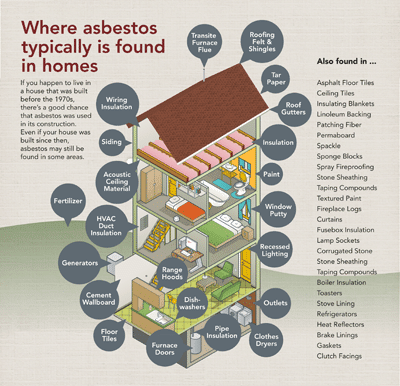
Where Is Asbestos in the Home?
Right now, asbestos is present in roughly 30 million homes in the United States alone. The older a house is, the more likely it was built with asbestos-containing materials.
In constructing American buildings, facilities, and houses, companies utilized asbestos-containing materials in insulation, fireproofing, roofing, pipe wrap, electrical wiring, and dozens of other applications.
Given the widespread use of asbestos in the 20th century, construction materials have left behind a hidden danger that lurks inside many houses — in the floors, baseboards, ceilings, and walls.
Talcum Powder & Cancer
Talc is a naturally occurring mineral used in cosmetics, baby powder, and other consumer products. However, during the mining process, it may become contaminated with asbestos, a known carcinogen.
Talcum powder use has been linked to:
- Mesothelioma
- Lung cancer
- Ovarian cancer
- Cervical cancer
Companies like Johnson & Johnson reportedly knew about the risk of asbestos in their talc products, yet they hid this information from the public for decades.
To help reduce your risk of preventable cancers, choose talc-free products and stay informed about the ingredients in cosmetics and personal care items.
Dangerous Products & Medications: New Risks Make Cancer Harder to Prevent
While asbestos-related cancers have been well known for decades, new research continues to reveal additional products and medications that may increase cancer risk, making prevention more difficult.
Families today can take steps to avoid known hazards like asbestos, but workers and everyday consumers are still exposed to risks in ways scientists and regulators are only beginning to understand.
Fortunately, legal options may still exist. When manufacturers fail to warn about the potential dangers of a product, those affected may be able to pursue compensation for the harm they’ve suffered.
Cancer from Chemical Hair Relaxers
The use of hair relaxers or chemical hair straighteners may increase the risk of uterine or endometrial cancer due to the presence of endocrine-disrupting chemicals (EDCs).
Women who use chemical straighteners more than 4 times a year are over twice as likely to develop uterine cancer, according to the National Institutes of Health. Black women, who make up the majority of hair relaxer users, may be especially at risk.
To date, over 11,440 hair relaxer lawsuits have been filed against companies like L’Oréal and Revlon for failing to warn users about these dangers.
To reduce your risk of cancer, consider limiting the frequency of chemical hair treatments and exploring alternative styling methods or products that are free from endocrine-disrupting chemicals.
Depo-Provera & Cancer
Women who received 4 or more injections of the contraceptive Depo-Provera are over 5 times more likely to develop a brain or spinal tumor known as a meningioma, according to new research published by the BMJ in 2024.
While the majority of these tumors are benign, approximately 10% of meningiomas are cancerous, according to Dana-Farber Cancer Institute.
At Sokolove Law, our Depo-Provera lawyers can help women across the country seek justice and pursue compensation from Pfizer, the drug’s manufacturer, for the harm they’ve suffered.
Dupixent & Cancer
Dupixent is an injectable medication used to treat conditions caused by type 2 inflammation, including eczema, asthma, and chronic sinus issues.
However, Dupixent has been linked to an increased risk of cutaneous T-cell lymphoma (CTCL), a rare form of non-Hodgkin lymphoma that affects skin cells. Users with eczema face a nearly 5 times higher risk of developing CTCL, according to a Dermatologic Therapy report published in 2024.
Because many patients were not aware of this potential risk, some may have developed a preventable cancer or missed the opportunity to make fully informed choices about their treatment.
If you use Dupixent, be sure to report any unusual skin changes or rashes to your doctor immediately.
Roundup & Non-Hodgkin’s Lymphoma
Exposure to Roundup, a popular herbicide that contains glyphosate, may increase the risk of certain cancers by over 40%, according to the University of Washington’s Department of Environmental & Occupational Health Sciences (DEOHS).
Cancers linked to Roundup exposure include:
- B-cell lymphoma
- Burkitt lymphoma
- Chronic lymphocytic leukemia
- Follicular lymphoma
- Hairy cell leukemia
- Lymphoblastic lymphoma
- Mantle cell lymphoma
- Marginal zone lymphoma
- Non-Hodgkin’s lymphoma
- Small lymphocytic lymphoma
- T-cell leukemia
- T-cell lymphoma
Anyone who was diagnosed with one of these cancers after exposure to Roundup may be eligible for compensation. Billions of dollars have already been awarded to victims and their families, according to the latest Roundup litigation news.
To reduce your risk of cancer from Roundup, be sure to wear protective gear when applying the herbicide and, when possible, avoid using glyphosate-based weed killers altogether.
Working to Prevent Cancer This Month
This month, we hope to advance our push for cancer prevention by bringing awareness to asbestos and other toxic substances that harm ordinary Americans.
You can offer your own assistance in this fight by promoting cancer awareness and by learning about and spreading knowledge of the preventable causes of cancer.
To protect your health, the Prevent Cancer Foundation recommends the following:
- Know your family health history and get recommended cancer screenings
- Don’t use tobacco
- Protect your skin from the sun
- Eat a plant-based diet
- Avoid or limit alcohol
- Maintain a healthy weight and be physically active
- Practice safe sex and avoid risky behaviors
- Limit exposure to asbestos and other known carcinogens
Whether it's mesothelioma, lung cancer, or some other type of cancer, one of the best ways to beat cancer is with early detection. Even better? Knowing and avoiding the direct causes of cancer in the first place.
In the U.S. alone, cigarette smoking is linked to 80-90% of all lung cancer deaths, showing that the disease can be mitigated or even prevented in some cases.
Our firm also stands proudly with advocacy groups that call for asbestos disease prevention and those who seek to fully ban asbestos in the U.S. once and for all.
Who Is At a Higher Risk for Preventable Cancers?
Some groups are at greater risk of preventable cancers due to exposure to toxic substances in their workplace. Recognizing these risks can empower individuals to take protective measures and make informed decisions about their health.
Those at a higher risk of cancer may include:
- Anyone who worked with asbestos: Jobs that worked with or around asbestos-containing materials — like construction workers, shipbuilders, mechanics, and factory workers — may be at risk of developing cancers like mesothelioma decades later.
- Agricultural workers: Farmers and other agricultural workers face a greater risk of certain cancers, including non-Hodgkin’s lymphoma. This may be due in part to exposure to toxic pesticides like Roundup
- Firefighters: Due to on-the-job exposures to toxins like asbestos in older buildings, firefighters are 9% more likely to be diagnosed with cancer, 14% more likely to die from cancer, and 50% more likely to get mesothelioma, according to the U.S. Centers for Disease Control and Prevention (CDC).
- U.S. military veterans: Around 56,000 veterans are diagnosed with cancer each year. Those who served in the military may have been exposed to hazardous substances that put them at risk. Veterans, for example, are 25% more likely to develop lung cancer, according to UC Irvine’s Comprehensive Cancer Center. Around 33% of mesothelioma cases can be linked to asbestos exposure in the U.S. Navy or shipyards.
Every American deserves to work in a safe environment, free from exposure to toxic substances that could eventually lead to a cancer diagnosis.
Companies must be held accountable for the products they make and the working conditions they provide, ensuring that harmful substances are kept out of job sites and employees are given the necessary protective equipment.
Sokolove Law: Support for Cancer Victims Nationwide
For more than 45 years, Sokolove Law has stood for and with the victims of preventable cancers and asbestos-related diseases.
In many cases, safer alternatives exist — but some companies choose more dangerous materials because they’re more profitable or easier to obtain. Such decisions have cost people their lives.
We believe the companies responsible for someone’s cancer should and must be held accountable. By taking legal action, you can stand up to corporate wrongdoing and pursue compensation for your medical bills and other expenses.
Contact Sokolove Law now if you or a loved one has been diagnosed with mesothelioma or another potentially preventable cancer. Our team is standing by to help you seek the justice you deserve.