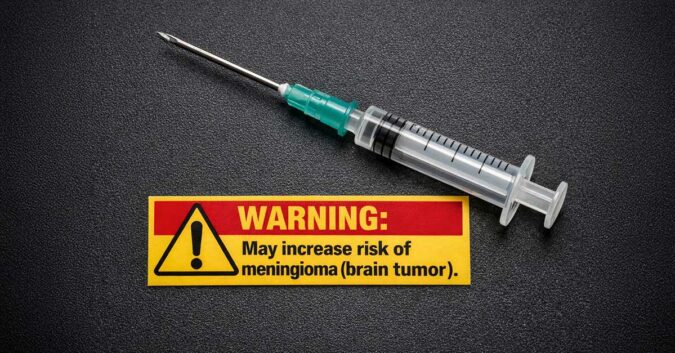
In December 2025, the U.S. Food and Drug Administration (FDA) approved the addition of meningioma brain tumor risks to the warning labels for Depo-Provera®, a popular birth control injection manufactured by Pfizer.
A study published in March 2024 found that women who received the Depo shot for over 1 year were 5.5 times more likely to develop meningiomas, tumors that form in the tissue surrounding the brain and spinal cord. This risk wasn’t previously included on the drug’s label.
Now, thanks to the FDA, Pfizer is required to warn that use of Depo-Provera has been associated with an increased risk of meningiomas when used for over a year.
In 2022, both Canada and the European Union required Pfizer to warn Depo shot users of the increased risk of meningioma tumors — but American women weren't offered such a warning.
In 2024, Pfizer had asked the FDA to update Depo-Provera’s label to include a meningioma warning, but the request was denied. It was only after additional data was submitted and reviewed that the agency reversed course and approved the warning in late 2025.
So far, over 2,000 women have filed Depo shot lawsuits against Pfizer after they were diagnosed with meningiomas they didn't feel properly warned about. If you received the birth control shot and later developed a meningioma, Sokolove Law may be able to fight for you.
What Does the Depo Shot Warning Update Mean for Me?
Federal regulators have formally changed how Depo-Provera is labeled in the United States, marking a pivotal moment in the long-running controversy surrounding the birth control shot and brain tumor risk.
While Pfizer has maintained that Depo-Provera remains safe when used as directed, the updated warning significantly alters the legal and public health landscape:
- For patients: The Depo shot warning means fuller disclosure of a serious potential risk tied to use.
- For victims: The warning represents a notable development that could influence how courts evaluate Depo-Provera failure to warn claims moving forward.
Generally, the FDA's Depo-Provera warning label update could provide additional evidence to help push Pfizer to offer victims Depo shot settlement payouts, which may assist with medical bills and other expenses.
Victims believe the label change validates claims that the risks were known — or should have been known — well before U.S. regulators took action.
Is the Meningioma Risk a Depo-Provera Black Box Warning?
No, as of December 2025, there is no black-box warning for Depo-Provera in the U.S. regarding meningiomas. A black box warning from the FDA is reserved for the most serious risks that prescribers and patients need to be aware of.
The latest FDA label change only requires Pfizer to include information about the meningioma risk linked to the Depo-Provera Contraceptive Injection (CI), but this update is not classified as a black box warning. Instead, it adds a cautionary statement about reported cases of brain tumors.
The updated Depo-Provera label includes this warning: “Cases of meningiomas have been reported following repeated administration of medroxyprogesterone acetate, primarily with long-term use. Monitor patients on Depo-Provera CI for signs and symptoms of meningioma. Discontinue Depo-Provera CI if a meningioma is diagnosed.”
The FDA has directed labeling to inform clinicians and patients of this potential risk, but it does not elevate it to the highest level of warning the agency uses. The new label advises health care providers to inform patients of this potential risk and monitor for meningioma symptoms.
While a Depo shot black box warning already exists for bone mineral density loss associated with long-term use, that warning is separate and unrelated to meningiomas.
Why Weren't There Brain Tumor Depo-Provera Warnings?
Since 2022, similar Depo-Provera warnings were already in place in Canada and Europe, while U.S. patients continued to receive the drug without being able to make an informed decision and consent to the risk. Initially, the FDA determined the data did not meet their threshold for action.
Earlier this year, Pfizer asked a judge to dismiss the growing Depo-Provera lawsuit, claiming they only became aware of the potential brain tumor risks linked to the shot in 2023. The company said they acted quickly, submitting an application to the FDA in February 2024 to update the drug’s label with a warning.
At the same time, Pfizer reportedly requested similar warnings for two oral birth control pills that contain much lower doses of medroxyprogesterone acetate, the same hormone ingredient in the Depo shot.
Regardless of the FDA's actions, Depo-Provera lawsuits maintain that Pfizer remains responsible for manufacturing and selling a dangerous drug, especially since studies dating back to 1983 have shown an association between progesterone and meningiomas.
"For years, Pfizer misled doctors, patients and the FDA about Depo-Provera’s link to meningiomas, resulting in the needless suffering of thousands of women who developed these dangerous brain tumors….We applaud the FDA in finally requiring this label change to better inform and protect women.”
– Attorney for Depo-Provera Victims
By filing a Depo-Provera lawsuit, women across the country helped put pressure on Pfizer to provide proper warnings on their products — and on regulatory agencies to ensure women are fully informed about the potential risks associated with the birth control they use.
Over 2,000 Women Have Filed Depo Shot Brain Tumor Claims
To date, more than 2,000 women have filed Depo-Provera claims alleging that use of the birth control shot led to the development of meningiomas, particularly brain tumors.
The number of claims keeps growing, highlighting both the widespread use of the shot and frustration that U.S. warnings lagged behind those in other countries.
Depo shot brain tumor lawsuits claim:
- Women weren’t told about the potential risk of brain tumors linked to Depo-Provera use
- Long-term use of the shot may have cumulative effects on brain health
- The FDA didn’t update U.S. labeling until recently, leaving users in the dark for years
- Pfizer knew or should have known about the risks but didn’t act seriously or quickly enough
Lawsuits against Depo-Provera claim research over the last 40 years shows a connection between progesterone and meningiomas. The Depo shot is made of a synthetic form of progesterone known as progestin, making the risk something Pfizer should have tested.
You only have a limited amount of time to take legal action for a Depo shot meningioma tumor. In some states, the statute of limitations may be as short as 1 year, so be sure to act fast. Compensation may be available to those who act in time.
Get Help Filing a Depo Shot Meningioma Lawsuit
When you're prescribed medication by a doctor, you should be able to trust that the only risks are those listed on the warning label. When manufacturers withhold risks or fail to properly test their products, everyday people are left to pay the price.
At Sokolove Law, our Depo-Provera lawsuit lawyers are proud to take a stand on behalf of women affected by meningiomas and ensure their voices are heard.
With over 45 years of experience, Sokolove Law has recovered more than $10.6 Billion total for injured clients across all 50 states. We have the experience and resources to hold companies like Pfizer accountable.
"I finally reached a law firm that truly understands the gravity of damage done by the Depo manufacturer."
– Syble, Depo-Provera Victim in Georgia
Get a free case review now. It costs nothing to speak with our team and learn more about your legal options.