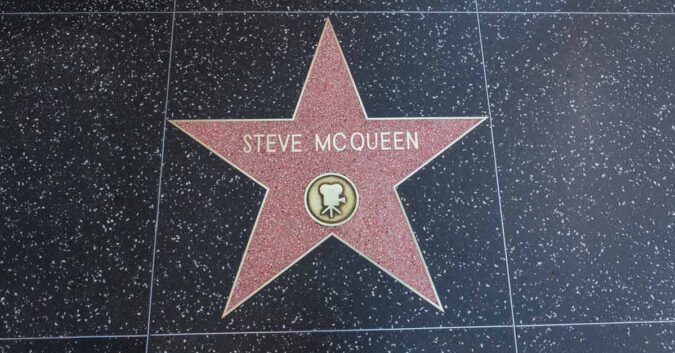
Steve McQueen, one of the biggest stars in Hollywood during the 1960s and 1970s, was more than just an actor — he was an American icon.
Before his rise to fame, McQueen worked in construction and joined the U.S. Marine Corps. He went on to captivate audiences with his intense performances, charm, and daring stunt work. From Bullitt to The Great Escape, many of his films remain classics to this day.
Tragically, McQueen’s life was cut short by mesothelioma, a rare and aggressive cancer caused by asbestos exposure. His story serves as a powerful reminder that this toxic mineral can impact anyone, regardless of their job or celebrity status.
If you or a loved one has been diagnosed with mesothelioma, contact Sokolove Law now. Our mesothelioma law firm has helped thousands of families nationwide seek justice and compensation for asbestos-related illnesses.
How Did Steve McQueen Get Mesothelioma?
For decades, Steve McQueen was exposed to asbestos through his work and personal hobbies. Over time, this repeated exposure led to a diagnosis of pleural mesothelioma, which forms in the lining of the lungs.
McQueen’s history of asbestos exposure may have involved:
- Brake Work: McQueen was an avid car and motorcycle enthusiast. He performed work on brake pads and clutches, which often contained asbestos to reduce heat and friction.
- Construction Sites: Before he became an actor, McQueen spent time working as a laborer at construction sites. Asbestos-containing materials like insulation, cement, drywall, and roofing products were commonly used at the time.
- Military Service: McQueen served in the U.S. Marine Corps while asbestos was still present in naval ships, vehicles, aircraft, and buildings on base.
- Movie Sound Stage Insulation: During the 20th century, asbestos could be found throughout Hollywood sound stages and film sets. While filming stunts and action scenes, McQueen may have unknowingly inhaled fibers released from fire curtains and other materials.
- Racing Suits: During his racing career, McQueen wore flame-resistant suits that were often made with asbestos fibers. Although designed for safety, these suits could shed asbestos dust when worn or laundered, especially after repeated use.
Since mesothelioma can take 20 to 50 years to develop after asbestos exposure, McQueen’s illness likely stemmed from exposure that occurred decades before his diagnosis in the 1970s.
His story underscores how anyone exposed to asbestos throughout their lives may still be at risk of illnesses like mesothelioma today.
Steve McQueen’s Asbestos Exposure in the Military
When he was just 17 years old, Steve McQueen asked his mom for permission to join the U.S. military. He enlisted in the U.S. Marine Corps in 1947 and was eventually assigned to the honor guard protecting the USS Williamsburg.
During his service, McQueen also worked as a tank driver and mechanic — jobs that often involved close contact with asbestos-containing materials.
He was tasked with removing asbestos lagging from pipes, describing the air as thick with asbestos while doing so. Unfortunately, such experiences were not uncommon among service members of his era.
For much of the 20th century, asbestos was widely used by all branches of the U.S. military. As a result, veterans now account for one-third of all mesothelioma diagnoses.
In 1950, McQueen was honorably discharged from the U.S. Marine Corps. His time in the military is considered his most extensive source of asbestos exposure.
A Shocking Pleural Mesothelioma Diagnosis
In 1978, McQueen began experiencing shortness of breath and a persistent cough. At first, he dismissed the symptoms as lingering effects of smoking or an infection. However, his breathing didn’t improve after quitting smoking or taking antibiotics.
One day, McQueen took off on his motorcycle, and his wife Barbara eventually found him sitting alone in a park. There, he finally admitted that he felt something was seriously wrong and needed further medical evaluation.
“His breathing wasn’t quite right,” Barbara explained. “He wasn’t the same Steve that I knew, and he was kind of running down. But he wasn’t old enough to be running down.”
A tumor was eventually discovered in the thin lining around his lung. After a biopsy, he was diagnosed with pleural mesothelioma. Doctors in California considered the tumor inoperable and offered little hope.
The diagnosis came as a shock to McQueen, who had been known for his athleticism throughout his career. Still, he refused to give in to the disease. Determined to fight for his life, McQueen began exploring alternative treatment options.
Fighting This Rare Cancer Any Way He Could
After his diagnosis, McQueen was advised that his cancer was rare, and chemotherapy would likely be ineffective at this stage. Doctors reportedly told McQueen and his wife Barbara that all of their other mesothelioma patients had passed away.
With conventional treatment options offering little hope, McQueen began looking for alternative ways to fight the disease. He traveled to Mexico and sought help under the alias Sam Sheppard.
McQueen was given laetrile, a controversial substance derived from apricot pits, and nutritional regimens that were believed to help detoxify the body. However, he was in significant pain and required strong sedatives to manage his symptoms.
In November 1980, McQueen underwent a risky surgery. Doctors removed tumors from his abdomen and chest wall, including one that weighed 5 pounds.
“After the operation, he was improving, he was even talking. He seemed in good spirits,” revealed Rosa Maria, the wife of McQueen's surgeon Dr. Cesar Santos.
Tragically, just hours after the procedure, McQueen suffered cardiac arrest and died in his sleep.
Steve McQueen Died of Mesothelioma in November 1980
On November 7, 1980, Steve McQueen passed away from complications linked to mesothelioma. He was 50 years old.
“Mesothelioma is a horrible disease. It robbed me of my life and future with Steve and took away an icon beloved by millions around the world,” said Barbara.
After his death, McQueen’s body was transported to El Paso and flown back to Los Angeles, where he was cremated. News of his death shocked fans around the world, and tributes poured in from fellow actors, filmmakers, and admirers.
Steve McQueen & Asbestos Awareness
Steve McQueen’s story serves as a powerful reminder that anyone, regardless of wealth, fame, or background, can be impacted by asbestos exposure.
Despite his success as one of Hollywood’s most beloved movie stars, the actor faced the same devastating diagnosis as countless everyday Americans who were unknowingly exposed to asbestos on the job or at home.
McQueen’s death helped bring national attention to the dangers of asbestos. His wife became an outspoken advocate for asbestos awareness and prevention.
”Most people think that asbestos is banned in America, but that’s not true,” said Barbara. “I want to bring awareness that asbestos is still legal in the U.S. and continues to kill. It can kill a movie star, a musician, or a construction worker. It takes no prisoners.”
Sokolove Law: Fighting for Families Impacted by Mesothelioma
At Sokolove Law, our mesothelioma lawyers are committed to fighting for families impacted by asbestos-related diseases. To date, we’ve secured more than $5.3 Billion total for thousands of patients and their loved ones across the country.
Taking legal action for mesothelioma is also a way for families to seek justice for the harm they’ve suffered. Many companies that made or sold asbestos-containing products knew they were dangerous, but they hid the risks to increase their profits.
Call (800) 647-3434 now or fill out our contact form if you or a loved one has been diagnosed with mesothelioma. It costs nothing to speak with us and learn more about your options.