While concerns about talc in cosmetics have been widely publicized, far less attention has been given to its presence in food, supplements, and medications, even though talc is often contaminated with asbestos, a toxic mineral linked to mesothelioma and other serious diseases.
Despite recently requiring stricter testing of talcum powder, the U.S. Food and Drug Administration (FDA) has made no such move to reevaluate or monitor the use of talc in food or pharmaceuticals.
In fact, many products used by millions of Americans haven't been reviewed for safety in over 50 years, despite information that they may pose a health risk, according to the Journal of the Academy of Public Health.
Everyday products that may contain talc include:
- Chewing gum and candy
- Lipitor®, the best-selling cholesterol medication in the U.S.
- Over-the-counter dietary supplements
- Wheat flour imported from China, where talc may be systemically added
For decades, manufacturers continued to use talc in their manufacturing processes without warning the public of the potential risks.
As a national mesothelioma law firm, Sokolove Law has helped thousands of families get justice for asbestos-related diseases by taking legal action against the companies that put them in harm's way.
Why Is Talc Used in Food, Supplements & Medicine?
Talc is a naturally occurring mineral made of magnesium, silicon, and oxygen. In its purest form, it’s often used in food and pharmaceutical manufacturing.
Talc in medicine, food, and supplements is used as:
- An anti-caking agent to prevent powders from clumping
- Filler to add volume to pills and tablets
- Lubricant to help prevent pills from sticking to machinery during production
However, talc is often mined from areas located near asbestos deposits. As a result, talc may be contaminated with microscopic asbestos fibers, raising serious health concerns and putting consumers at risk.
"There is no 'safe' level of asbestos exposure for any type of asbestos fiber."
– Occupational Safety and Health Administration (OSHA)
Talc in Food and Supplements
Talc is commonly used in foods and supplements as an ingredient or processing aid, but it’s not always listed on labels. This lack of transparency can prevent consumers from understanding their exposure to a potentially hazardous substance.
Talc has been used in:
- Bubble gum
- Cheese
- Dried whey and whey products
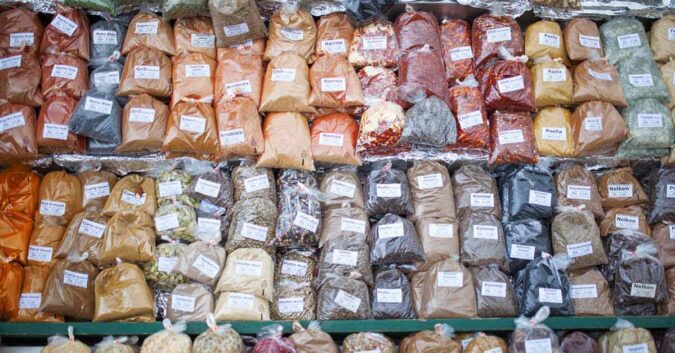
- Herbs and spices
- Milk powder and cream powder
- Salt substitutes
- Vitamin tablets and capsules
The FDA has long classified talc as “Generally Recognized As Safe” (GRAS), but this designation hasn't been reevaluated since the 1970s, well before the potential for asbestos contamination in talc-based products was widely known.
Talc Uses in Medicine
In the production of pills, talc is frequently used to help tablets maintain their shape, serve as a binding agent, and prevent them from sticking.
Medications that may contain talc include:
- Lipitor, a cholesterol medication used by over 10 million patients a year
- Neurontin®, an anti-seizure drug used by almost 1 million patients a year
- Prilosec®, a heartburn medication used by nearly 3 million patients a year
- Synthroid®, a thyroid hormone used by over 4 million patients a year
Talc-containing medications like Synthroid and over-the-counter Nexium® and Prilosec® have been linked with an increased risk of cancer. Medical procedures that involve talc have also been linked to serious diseases.
In one case, a mesothelioma patient was awarded $39 Million after developing the disease following a procedure called a pleurodesis that involved medical-grade talc. The Massachusetts jury found that the talc company's negligence contributed to his illness.
While talc is typically listed on drug labels, many consumers may not recognize it as a potential source of asbestos exposure.
Is Talc in Medicine, Food & Supplements Safe?
The International Agency for Research on Cancer (IARC) has classified talc as "probably carcinogenic to humans." The group's classification is the second-highest level of certainty that a substance can cause cancer.
Over the years, the FDA's own testing has revealed the presence of asbestos in several consumer talc products, including Johnson & Johnson's talcum powder products.
Unfortunately, talc used in food, supplements, and pharmaceuticals is not subject to the same purity testing as cosmetic talc, increasing the risk of undetected asbestos contamination.
Asbestos-related diseases linked to contaminated talc include:
- Mesothelioma
- Ovarian cancer
- Lung cancer
These diseases can take 20-50 years to develop, making it difficult for consumers to connect their illness to earlier use or consumption of products that contain talc.
Given these risks, public health advocates and scientific experts are urging the FDA to launch a comprehensive reevaluation of talc’s use in all ingestible and inhalable products, not just cosmetics.
"[W]e call for the federal health agencies to prioritize a thorough and transparent reevaluation of talc’s risks, including its widespread presence in everyday products like food, cosmetics, and pharmaceuticals. The health of millions of people may depend on it."
– Authors of "Reviewing the Safety of our Foods and Drugs"
How to Protect Yourself from Talc in Food & Medicine
Although talc is still widely used in food, supplements, and medications, consumers are often unaware of the potential risks. With a lack of federal oversight, contaminated talc can quietly make its way into products many people rely on daily.
Until stronger regulations are put in place, the responsibility falls on consumers to stay informed and make careful choices. Fortunately, there are practical steps you can take to reduce your risk of exposure to asbestos in food and medicine and safeguard your health.
Here’s how you can protect yourself and your loved ones:
- Check ingredient labels: Talc may be listed as “talc,” “talcum,” or “magnesium silicate.” It often appears in supplements, antacids, and coated tablets.
- Look for talc-free alternatives: Some brands label their products as "talc-free," especially in the supplement and personal care space. These products may use safer binding or anti-caking agents.
- Monitor FDA announcements: Although the agency has been slow to act on talc safety, it occasionally issues alerts about products that test positive for asbestos contamination. Staying informed can help you avoid unsafe items.
- Ask your doctor or pharmacist: If you take a prescription or over-the-counter drug regularly, your health care provider may be able to recommend a version that doesn’t contain talc.
While talc may seem like a harmless additive, its potential for asbestos contamination makes it a substance worth avoiding.
Until regulatory agencies catch up with the science, awareness and advocacy remain critical tools in protecting public health.
Get Help from Our Talc Attorneys
For more than 45 years, Sokolove Law has helped families impacted by asbestos-related diseases seek justice and compensation, including those who were exposed to this dangerous mineral through talc.
We know how overwhelming a diagnosis can be. Our asbestos attorneys can handle all the legal work on your behalf, so you can focus on what matters most — your health and your loved ones.
We've helped thousands of patients across the country get the compensation they deserve, recovering over $5.6 Billion for asbestos-related diseases.
Call (800) 647-3434 right now or fill out our contact form for a free case review. You don’t have to go through this alone.