
What Are Early Signs of Mesothelioma?
Mesothelioma develops 20-50 years after exposure to asbestos. In many cases, the cancer doesn’t actually cause any noticeable symptoms for decades, according to the Moffitt Cancer Center.
When early signs of mesothelioma do appear, they’re typically mild. Patients could mistake vague symptoms like chest pain or a cough for those of less serious health issues like the flu or bronchitis. Most patients are frequently diagnosed in the later stages of mesothelioma.
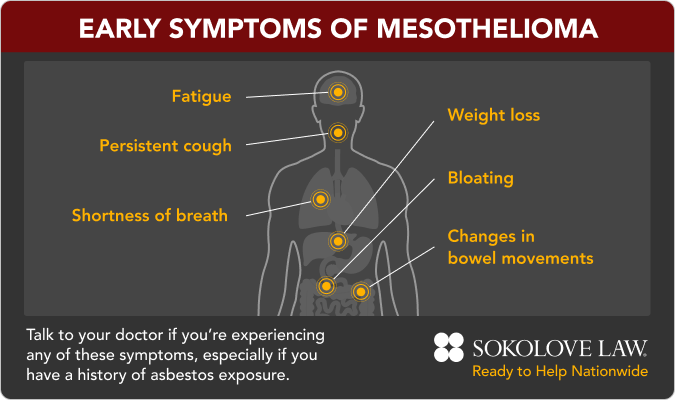
Notable early symptoms of mesothelioma include:
- A cough
- Abdominal distention (bloating)
- Appetite loss
- Changes in bowel movements
- Fatigue
- Fever
- Mild shortness of breath
- Night sweats
- Pleural effusion (fluid buildup in the lung lining)
- Unexplained weight loss
If you have a history of asbestos exposure and are now suffering from possible early mesothelioma symptoms, it’s crucial to see a cancer specialist who can help to diagnose and treat you.
For over 45 years, Sokolove Law has fought for families impacted by mesothelioma. Our asbestos law firm may be able to help you seek compensation for treatments, and we have nurses on staff who can help you understand your diagnosis.
Since 1979, Sokolove Law has secured over $5.3 Billion for thousands of mesothelioma victims and their families.
Get a Free Case Review
Early Mesothelioma Symptoms by Type
Mesothelioma is a cancer that develops in the lining of certain organs. The tumors can start in different parts of the body. Because of this, there are many possible first symptoms of mesothelioma.
Types of mesothelioma include:
- Pleural mesothelioma affects the lining of the lungs (pleura) and causes respiratory symptoms like a cough and difficulty breathing to develop first.
- Peritoneal mesothelioma develops in the abdominal lining (peritoneum), affecting appetite and digestion
- Pericardial mesothelioma affects the lining of the heart (pericardium), causing chest pain and other complications
- Testicular mesothelioma forms in the lining of the testicles (tunica vaginalis), leading to swelling and pain
Find out more about the early symptoms of mesothelioma for each type of this cancer and how each could impact you or a loved one.
Pleural Mesothelioma Early Symptoms
Because this type of mesothelioma forms in the lung lining, the first pleural mesothelioma symptoms often involve respiratory issues, like a cough or shortness of breath, that worsen as the disease progresses.
Over time, many pleural mesothelioma patients report not being able to walk to the mailbox outside or up the stairs without struggling to catch their breath.
Early symptoms of pleural mesothelioma may include:
- A dry, persistent cough
- Mild chest pain
- Difficulty breathing
- Fatigue or low energy
- Low-grade fever
- Night sweats
- Shortness of breath
- Shoulder pain
- Weight and appetite loss

“I was having a hard time breathing, and I thought maybe it was allergies. When I went to urgent care, they said that the left lung was collapsed, so they rushed me over to the hospital.”
– David, Pleural Mesothelioma Patient & Firm Client
Many pleural mesothelioma symptoms are caused by pleural effusions or fluid buildup in the lining between the lung and chest wall. Pleural effusions can lead to chest pain, a cough, and more, according to Nature Reviews Disease Primers.
Peritoneal Mesothelioma Early Symptoms
Malignant peritoneal mesothelioma begins in the lining of the abdomen, known as the peritoneum. Initially, patients may experience vague symptoms like digestive issues and discomfort, which can make the disease difficult to recognize at first.
Ascites (fluid buildup in the abdomen) can also contribute to symptoms, leading to worsening distention, pain, fatigue, and vomiting and nausea, according to the Journal of Palliative Care.
Early symptoms of peritoneal mesothelioma may include:
- Abdominal pain
- Constipation or diarrhea
- Distention (bloating)
- Loss of appetite
- Nausea and vomiting
- Weight loss

“We went out for supper, and I got this pain in my stomach that just really kicked my butt. I went to get an ultrasound. My doctor said I had ascites in the belly, which leads or points to cancer."
– Dennis, Peritoneal Mesothelioma Patient & Firm Client
Up to 80% of patients experience abdominal distention or bloating as their first peritoneal mesothelioma symptom, per the Annals of Translational Medicine.
Pericardial Mesothelioma Early Symptoms
Pericardial mesothelioma affects the tissue surrounding the heart, known as the pericardium. Early symptoms like a cough and pain could be mistaken for more common heart or lung-related health issues.
Early signs of pericardial mesothelioma may include:
- Chest pain
- Cough
- Heart murmur
- Heart palpitations
- Inflammation of the heart lining
- Irregular heartbeat
- Pericardial effusion (fluid buildup around the heart)
- Shortness of breath
- Unexplained fatigue
It’s often difficult to diagnose pericardial mesothelioma before it spreads, so even early symptoms could indicate late-stage cancer. Sadly, up to 3 in 4 cases of pericardial mesothelioma are only diagnosed after the patients have passed away, according to Clinical Lung Cancer.
Testicular Mesothelioma Early Symptoms
Testicular mesothelioma is the rarest form of this cancer, affecting the lining of the testicles (tunica vaginalis). Patients typically report pain and swelling in the testicle pouch among the first symptoms.
Early symptoms of testicular mesothelioma may include:
- A hard, painful mass in the testicles
- Hydrocele (fluid buildup in the testicle lining)
- Swelling of the testicle or testicle lining
Many cases of testicular mesothelioma are only diagnosed when suspicious tissue is found during surgery for a hydrocele, according to the Journal of Medical Case Reports.
Patients may initially brush off symptoms of testicular mesothelioma since they appear mild. For instance, a patient was diagnosed with testicular mesothelioma after surgery, but had been experiencing testicular swelling for 6 months prior, according to Molecular and Clinical Oncology.
Will I Have Early Mesothelioma Signs?
Not every mesothelioma patient will experience early mesothelioma signs. In many cases, symptoms only appear after mesothelioma has spread and reached an advanced stage.
“Early-stage mesothelioma often has no symptoms. Once noticeable symptoms start, the disease has usually progressed. Many patients who are diagnosed with malignant mesothelioma have one or more symptoms, which can vary depending on the type of mesothelioma.”
– Penn Medicine
Between 70% and 80% of early-stage mesothelioma patients are actually “upstaged” during surgery, meaning they have a higher stage of cancer than originally thought, according to the Journal of Clinical Oncology.
To stay on top of your health, it’s important to see a doctor if you notice any possible early signs of mesothelioma disease, especially if you or a loved one previously worked with or around asbestos.
When Do Very Early Mesothelioma Symptoms Appear?
It can take decades for very early mesothelioma symptoms to develop. The cancer has a long latency period, so first symptoms typically appear 20-50 years after asbestos exposure.
The average age of a mesothelioma patient at the time of diagnosis is 72 years old, according to the American Cancer Society (ACS). A majority of patients are only diagnosed after symptoms appear, as noted by Penn Medicine.

“The average worker did not know asbestos was dangerous. The reason why we’re able to bring claims against the manufacturers who used asbestos in their products is because they knew it was dangerous.”
– Ricky LeBlanc, Managing Attorney of Sokolove Law
If you or someone you love was diagnosed with mesothelioma cancer, we may be able to support your family through this uncertain time.
Call us at (800) 647-3434 now for help exploring mesothelioma treatment options, finding specialists, and pursuing compensation for treatments.
What to Do If You Notice Early-Stage Mesothelioma Symptoms
If you're concerned you may be experiencing early symptoms of mesothelioma, there are several steps you can take to stay on top of your health.
Here are tips for early-stage mesothelioma symptoms:
- Don't ignore them: Because early signs of mesothelioma are often mild or nonspecific, they’re often easy to dismiss, according to the ACS. However, not taking action could prevent the cancer from being diagnosed before it spreads.
- See a doctor promptly: A doctor can review possible symptoms, order tests, and refer you to a mesothelioma specialist for further evaluation, as noted by the Mayo Clinic.
- Share any history of asbestos exposure: Asbestos is the only known cause of mesothelioma. Letting your doctor know about when, where, and how you may have been exposed, no matter how long ago it was, can help guide testing and referrals.
While early detection of mesothelioma symptoms is challenging, taking action quickly might increase the chances of getting diagnosed early, helping to give you or a loved one a better mesothelioma prognosis.
How Doctors Diagnose Mesothelioma Early Symptoms
If you have possible early mesothelioma symptoms, the first step is often meeting with your general practitioner to help rule out more common health issues.
If mesothelioma is still suspected, you could be referred to a cancer specialist. Specialists use several tests to investigate potential mesothelioma symptoms and confirm a diagnosis.
Common steps to diagnose mesothelioma early symptoms include:
- Physical exams: A doctor may begin by checking for visible or physical changes, like chest wall abnormalities, abdominal swelling, or areas of tenderness.
- Imaging tests: X-rays, CT scans, MRI scans, and PET scans can reveal abnormalities like fluid buildup, suspicious masses, and more.
- Blood tests: Some patients have elevated levels of certain proteins or markers that may point to mesothelioma. While blood tests can’t confirm a mesothelioma diagnosis, they may help guide next steps.
- Biopsies: A biopsy involves removing a small piece of tissue to confirm the presence of mesothelioma cells. This test is the only way to know for sure whether you have mesothelioma.
If you are diagnosed with mesothelioma, your doctors can recommend a treatment plan to manage your symptoms and potentially allow you to live longer, depending on the circumstances in your case.
Misdiagnosing Early Signs and Symptoms of Mesothelioma
Mesothelioma is a rare cancer, affecting only around 3,000 people a year in the United States. Most doctors don’t have experience with it and may not jump to diagnosing it until they’ve ruled out other, more common conditions.
Because early symptoms are often mild and resemble those of far more common conditions, misdiagnosis is a frequent concern — especially in the early stages of the disease.
First signs of mesothelioma can be mistaken for:
- Lung cancer
- Benign (noncancerous) tumors
- Breast cancer
- Bronchitis
- Cardiovascular disease
- The flu
- Ovarian cancer
- Pneumonia
- Other asbestos-related diseases
Misdiagnosing early mesothelioma symptoms may prevent patients from getting the care they need. Most mesothelioma patients experience symptoms for several months before their diagnosis is confirmed, according to the ACS.
“Misdiagnosis is common, so a biopsy with immunohistochemical and molecular testing is critical to confirming the diagnosis. You can also ask for second opinions.”
– Dr. Estelamari Rodriguez, Mesothelioma Specialist
Treating Early Symptoms of Mesothelioma Cancer
When mesothelioma symptoms are diagnosed early, there are typically more treatment options available, as the cancer may not have spread through the body yet.
Doctors can use different combinations of mesothelioma treatments to destroy as much of the cancer as possible, potentially improving survival time, easing symptoms, and slowing the progression of the disease.
Treatments for early symptoms of mesothelioma cancer may include:
- Surgery: Doctors may recommend surgery to remove tumors, which may help patients live longer. Less invasive procedures can also be used to relieve mesothelioma symptoms.
- Chemotherapy: This medication is provided to kill mesothelioma cells, typically by itself or in combination with surgery or radiation for more effective results.
- Radiation therapy: This treatment uses beams of energy to prevent mesothelioma cells from dividing. Doctors often recommend using radiation in combination with other treatments like surgery.
- Immunotherapy: Immunotherapy medications help the body find and destroy mesothelioma cells. It is a newer treatment that has shown promise in improving survival time and reducing symptoms.
- Palliative care: Many palliative or pain-relieving options are available for patients, even from the outset of a mesothelioma diagnosis. Painkillers, minor surgeries, and draining fluid buildup can ease early mesothelioma symptoms.
Since every diagnosis is unique, treatment plans will be personalized based on the cancer’s location, stage, type, and a patient’s individual symptoms. Doctors often combine multiple treatments to improve results and help patients live longer.
At Sokolove Law, our mesothelioma lawyers work with our on-staff registered nurses who can help you understand your mesothelioma diagnosis and treatment options.
Mesothelioma Early-Stage Symptoms vs. Near-Death Symptoms
As mesothelioma progresses, early symptoms can become more severe, and new complications may appear. Symptoms typically worsen as the cancer spreads through the body, impacting the function of essential organs.
Mesothelioma symptoms near death include:
- Confusion
- Difficulty breathing
- Insomnia
- Mood changes
- Muscle wasting
- Night sweats
- Severe fatigue
- Weakness
- Worsening abdominal or chest pain
Any new or worsening symptoms should be discussed with your doctor. This can help determine if the cancer is spreading and which treatments should be used to help the patient.
When mesothelioma patients are suffering from end-stage symptoms, doctors typically recommend palliative care as the main course of treatment. Palliative care focuses on comfort, symptom relief, and quality of life, helping patients and their families navigate this stage with greater support and clarity.
“I think those patients who are pretty symptomatic and who don't have resectable disease should be seen by palliative care specialists. It does help in setting expectations and goals of care.”
– Dr. Deepa Magge, Mesothelioma Specialist
Affording Medical Costs for Early Mesothelioma Symptoms
The costs of diagnosing and treating early mesothelioma symptoms can add up quickly. In fact, the medical bills may reach over $400,000 a year, and insurance may not cover all of it.
At Sokolove Law, we may be able to help you pursue compensation for medical bills and other expenses impacting your family. The average legal settlement for mesothelioma is $1 Million to $1.4 Million.

“Hiring Sokolove Law was one of the best decisions we've made. They're an extremely knowledgeable firm, and they legitimately care. We never felt alone.”
– Connie, Wife of a Mesothelioma Patient & Firm Client
As a national mesothelioma law firm, we can help families in all 50 states. There are no upfront costs or hourly fees to work with our team.
Our attorneys can handle every step of the legal process on your behalf, allowing you to focus on your health, treatments, and family.
Billions Recovered Nationwide
At Sokolove Law, we’ve recovered over $5.3 Billion for thousands of mesothelioma patients and their families nationwide. Let us get you the results you deserve.
Get Help for Early Mesothelioma Symptoms
If you or a loved one is experiencing possible early signs of mesothelioma, don't wait. At Sokolove Law, our registered nurses can help review symptoms, answer questions, and recommend next steps for your family.
Our mesothelioma lawyers may also be able to pursue compensation on your behalf from a legal claim. To date, we’ve recovered more than $5.3 Billion for families impacted by mesothelioma.
However, it’s important to act fast. Time is limited to file mesothelioma claims, so if you wait too long, you may have fewer legal options.
Many clients start receiving compensation in as few as 90 days, helping with medical bills and providing peace of mind.
Call (800) 647-3434 now or fill out our contact form to learn how we may be able to help your family access the care and compensation you deserve.
Identifying Mesothelioma Symptoms Early FAQs
What are the early warning signs of mesothelioma?
Early warning signs of mesothelioma include chest pain, fatigue, shortness of breath, and a cough that won’t go away. These symptoms are typically mild or vague but worsen over time without care.
Common early symptoms of mesothelioma include:
- A persistent cough
- Abdominal or chest pain
- Fatigue
- Fever
- Night sweats
- Shortness of breath
- Unexplained weight loss
These early mesothelioma symptoms are easily dismissed as less serious health issues like the flu. However, if you or a loved one were ever exposed to asbestos, mesothelioma shouldn’t be ruled out.
Get a free case review now if you or someone you love has mesothelioma. You may be eligible for compensation to cover diagnostic and treatment options.
What are the symptoms of stage 1 mesothelioma?
Common stage 1 mesothelioma symptoms include mild chest pain, shortness of breath, a persistent cough, and a fever, according to the Moffitt Cancer Center.
However, many patients don’t experience any noticeable symptoms with stage 1 mesothelioma. This is because symptoms of mesothelioma may not appear until after the cancer has reached an advanced stage, according to the American Lung Association.
What are the first signs of peritoneal cancer?
The first signs of peritoneal mesothelioma cancer often include abdominal bloating, pain, bowel movement changes like constipation, and weight or appetite loss.
For up to 80% of patients, the first sign is specifically abdominal bloating or distention, according to the Annals of Translational Medicine.
How do I know if I have mesothelioma?
You cannot know for certain whether you have mesothelioma based on symptoms alone. A biopsy is the only way to confirm a mesothelioma diagnosis.
If you have a history of asbestos exposure and are experiencing ongoing symptoms like chest pain, shortness of breath, abdominal bloating, or unexplained weight loss, it’s important to see a doctor as soon as possible.
What does early mesothelioma feel like?
Early mesothelioma often feels subtle and nonspecific. Many patients report symptoms that seem minor at first, including fatigue, mild chest or abdominal discomfort, shortness of breath during routine activities, or changes in appetite.
The exact sensation can vary depending on the type of mesothelioma. For example, early pleural mesothelioma symptoms may feel like persistent breathing issues or chest tightness, while early peritoneal mesothelioma symptoms may cause bloating or digestive discomfort.
Can you survive mesothelioma if caught early?
Yes. When mesothelioma is caught early, treatment may help slow the progression of the disease and, in some cases, significantly extend life expectancy
Some mesothelioma patients have gone on to become long-term survivors, living many years beyond their initial diagnosis.
Get a free case review now to connect with our on-staff mesothelioma nurses who can help you find a specialist and understand your treatment options.
What age do most people get mesothelioma?
The average age at the time of a mesothelioma diagnosis is 72 years old, according to the American Cancer Society. This is because mesothelioma has a long latency period, meaning symptoms typically appear 20 to 50 years after asbestos exposure.
However, some patients are diagnosed with mesothelioma much earlier in life, which may be due to secondhand asbestos exposure during childhood.
How soon after asbestos exposure do mesothelioma symptoms appear?
Symptoms of mesothelioma usually take 20-50 years to develop after asbestos exposure. However, since initial signs are often not severe, patients may not attribute them to a rare and aggressive cancer.
As a result, many mesothelioma diagnoses are delayed, with symptoms not confirmed until several months after they started.
Can mesothelioma be detected early?
In some cases, doctors can use blood tests to help detect mesothelioma early. For example, if a patient’s blood is high in fibulin-3 and soluble mesothelin-related peptides (SMRPs), they may have mesothelioma, according to the ACS.
Other tests, like imaging scans, can also help doctors identify possible signs of mesothelioma in the body. However, the only way to confirm a mesothelioma diagnosis is with a biopsy, where a sample of fluid or tissue is checked for cancer cells.
What mimics mesothelioma?
In the early stages of mesothelioma, symptoms are frequently mistaken for more common conditions, including respiratory issues and digestive problems.
Conditions that may mimic mesothelioma include:
- Bronchitis
- Cardiovascular disease
- Lung cancer
- Pneumonia
- The flu
- Ovarian cancer
- Benign (noncancerous) tumors
- Other asbestos-related diseases
Because of these similarities, misdiagnosis is common, especially when asbestos exposure history is not immediately considered.
How do you rule out mesothelioma?
Doctors often rule out or confirm mesothelioma through a series of tests, including imaging tests like X-rays, blood tests, and a biopsy to check for cancerous mesothelioma cells. A biopsy is the only way to definitively confirm or rule out a mesothelioma diagnosis.
What are the first signs of mesothelioma?
The first signs of mesothelioma include a cough, shortness of breath, mild chest or abdominal pain, and a low-grade fever. These symptoms often resemble those of more common health issues like bronchitis but worsen over time as the cancer tumors spread through the body.
For this reason, it’s helpful to see a doctor if you have potential early signs of mesothelioma and to let them know if you were ever exposed to asbestos. From there, your doctors can recommend tests to help diagnose the symptoms and treat you.
