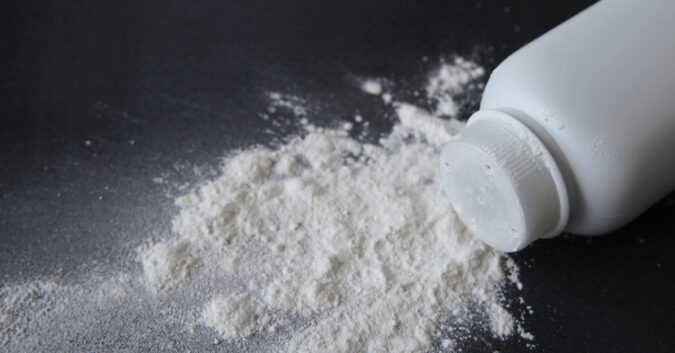
Announced July 28, Johnson & Johnson has agreed to pay $5.5 Billion to resolve tens of thousands of lawsuits alleging their talc-based baby powder caused ovarian cancer — the closest the company has come to ending over a decade of litigation.
The $5.5 Billion Johnson & Johnson talc settlement would resolve an estimated 76,000 ovarian cancer lawsuits pending in federal and state courts, representing nearly all of the claims currently in the litigation.
Unlike J&J's 3 failed attempts to resolve the talc litigation through bankruptcy, this talc settlement was reached directly with the victims' attorneys, with a court-appointed mediator overseeing negotiations.
The deal is not yet final. It's dependent on at least 95% of eligible claimants agreeing to participate. If that threshold isn't met, the ovarian cancer talc settlement could fall apart, with the litigation continuing in court.
If you or a loved one developed ovarian cancer after using talcum powder, you may still have options, whether this settlement is finalized or not. Find out if you qualify for compensation.
What's in the $5.5 Billion J&J Talc Settlement?
While the J&J talc settlement still needs to clear the participation threshold and several other hurdles, the company and attorneys for victims and their families have already outlined the basic shape of the agreement.
This deal replaces J&J's earlier attempt to resolve talc claims through an $8 Billion bankruptcy settlement. Courts had already rejected 3 prior J&J bankruptcy filings, ruling the company wasn't in the kind of financial distress required to use bankruptcy protection.
This new talc settlement takes a different approach — smaller in total dollars but structured to provide larger and faster payouts.
Here's what's known so far about the J&J talc lawsuit settlement:
- Covers an estimated 76,000 pending ovarian cancer claims in the talc multidistrict litigation (MDL) and state courts
- Requires sign-off from victims' law firms representing at least 95% of eligible claims before it can move forward
- Was negotiated outside of bankruptcy court, unlike J&J's prior settlement attempts — removing the legal vulnerability that sank the $8 Billion bankruptcy plan
- Accelerates payouts, so all claims are resolved within 18 months, rather than being spread out over a decade or longer as the bankruptcy proposals would have done
- Applies only to existing claims, not future lawsuits, so anyone diagnosed after this settlement closes will need to file an individual lawsuit against J&J
- Does not appear to resolve claims involving mesothelioma, another asbestos-related cancer
Individual payout amounts under the settlement have not yet been made public. Compensation is expected to vary based on factors like age, diagnosis, and length of talc product use.
Because future claims are excluded, the J&J talc settlement money is concentrated among a fixed group of claimants rather than spread across an open-ended pool — partially why claims are expected to award more than under the previous bankruptcy proposal.
J&J expects to pay $3 Billion in 2027, with further payments following in 2028. Because the settlement assigns set values to qualifying claims rather than capping J&J's total payout, the final cost could exceed $7 Billion.
From Bankruptcy Court to the Negotiating Table: A Timeline
Johnson & Johnson spent years unsuccessfully trying to resolve the talc litigation through bankruptcy before shifting to direct settlement talks.
Here's a look at how J&J got from bankruptcy filings to the proposed settlement:
- March 2025: A bankruptcy judge rejected J&J's third attempt at a settlement, an $8 Billion offer to be paid out over 25 years, citing concerns over how claimants' votes were collected.
- December 2025: A California jury awarded $40 Million to two women with ovarian cancer in the first Los Angeles talc bellwether trial. Separately, a Baltimore jury awarded over $1.5 Billion to a woman with mesothelioma.
- January 2026: A Philadelphia jury ordered J&J to pay $250,000 to the family of a woman who died of ovarian cancer.
- June 2026: J&J won a 6-week California bellwether trial involving three women with ovarian cancer by a 10-2 defense verdict, a reminder that trial outcomes for victims are never guaranteed.
- July 2026: The company announced the $5.5 Billion talc settlement proposal, conditioned on 95% claimant participation
About a week before the Johnson & Johnson talc powder settlement, a federal judge expressed doubt that patients would be able to link their ovarian cancer to talc after testimony by a key expert was withdrawn.
With mixed trial results on both sides throughout 2025 and 2026, a negotiated J&J talc settlement offered both parties more certainty than continuing to litigate case by case.
"More than a decade of protracted litigation and three failed bankruptcies has left tens of thousands of women and their families waiting far too long for relief. Tragically, many did not live to see this day."
– Talcum Powder Lawyer
Asbestos in Talcum Powder: Is Talc Safe?
For decades, consumers were told talcum-based baby powder was safe for use. The mineral talc is effective in absorbing moisture, making it a popular addition to cosmetic and personal hygiene routines.
However, talc is often contaminated with asbestos because the minerals naturally form in close proximity. Even with safe mining practices, it’s often unknown whether the talc has been contaminated until much later. Any talc that contains asbestos is considered carcinogenic, per the International Agency for Research on Cancer.
As some frequent talcum powder users developed serious illnesses, many families began to take legal action over this household staple.
Johnson & Johnson talc lawsuits claim the powder caused various cancers, including:
- Mesothelioma
- Ovarian cancer
- Lung cancer
- Stomach cancer
- Uterine cancer
The company has offered mesothelioma settlements in around 95% of cases involving this asbestos cancer and their talc products. Settlements for mesothelioma award $1 Million to $1.4 Million on average.
While J&J continues to argue that talcum powder is safe, the company discontinued their talc-based powders and switched to corn starch alternatives in 2023.
A Long History of J&J Dodging Accountability
The latest Johnson & Johnson talcum powder lawsuit settlements come after years of the company avoiding accountability for their dangerous products.
Unfortunately, Johnson & Johnson executives knew of the potential risks linked to their talc products but hid this information from the public and halted internal safety studies.
For years, the company silently settled thousands of talc lawsuits while refusing to admit wrongdoing:
- October 2019: The U.S. Food and Drug Administration (FDA) detected asbestos in J&J’s baby powder. Despite efforts to dispute the FDA findings, the company recalled thousands of baby powder bottles from shelves.
- February 2021: J&J set aside $3.9 Billion for victims of their dangerous talcum powder. However, as the number of lawsuits against them continued to grow, the company put victims and their families through multiple legal hurdles in an effort to avoid liability.
- July 2021: Johnson & Johnson was ordered to pay $2.12 Billion to 22 women who claimed their ovarian cancer diagnoses were linked to asbestos in the company’s baby powder and talc products.
- October 2021: J&J attempted to avoid the lawsuits against them by pushing 38,000 talc lawsuits to bankruptcy court, a process known as the Texas two-step. This process was blocked by an appeals court, which claimed J&J and their subsidiaries had plenty of money to cover the claims against them.
- April 2023: The company offered to pay $8 Billion to settle talcum powder lawsuits filed by victims who developed cancer from the company's talc products. This settlement offer was rejected by the courts for being too low.
- June 2024: Johnson & Johnson was ordered to pay $260 Million to an Oregon woman with mesothelioma who claimed the company’s talc products caused her condition. However, this verdict was later appealed and overturned in September, with a new trial pending.
- July 2024: A federal supreme court blocked J&J's second attempt at bankruptcy to shed the thousands of talc ovarian cancer claims against the company, affirming an earlier loss.
- August 2024: J&J has allegedly received the 75% of votes needed for their bankruptcy proposal. However, attorneys believe this won’t stand up in court.
- September 2024: Johnson & Johnson’s subsidiary has filed for bankruptcy for a third time. The company increased their talc ovarian cancer settlement offer to $8 Billion in hopes of addressing concerns that previous offers were insufficient and securing court approval.
- May 2025: J&J sued Dr. Jacqueline Moline to discredit her research linking asbestos-contaminated talc to mesothelioma. The lawsuit was dismissed, but the company filed an amended complaint renewing the effort to undermine her as a key witness.
- November 2025: At a trial involving two women who alleged that talc caused their ovarian cancer, former FDA commissioner David Kessler testified that internal J&J documents showed the company detected asbestos in their talc as early as the 1970s, yet continued marketing the products as safe for more than 50 years.
- February 2026: A federal appeals court revived a libel lawsuit filed by a J&J talc subsidiary over Dr. Moline's scientific article linking asbestos in talc to mesothelioma after a lower court had already dismissed it. This extended the company's effort to discredit the same researcher across separate cases.
- March 2026: The Lancet retracted a 1977 report that had claimed talc posed no serious health risks. Columbia researchers uncovered that a J&J-paid consultant wrote the report, had shared an advance draft with J&J, and revised it based on the company's feedback.
- May 2026: At trial, ex-FDA chief David Kessler testified that J&J altered 1970s test results showing asbestos in their talc and sent the doctored results to the FDA.
- June 2026: A Minnesota judge denied J&J's bid for a new trial in a $65.5 Million mesothelioma verdict. The company had argued that the jury should've heard about the patient's husband's past infidelity to undercut his $27.5 Million loss-of-services award.
Throughout this history, J&J has maintained that their talc products are safe and that claims linking talc to cancer "lack scientific merit" — a position the company continues to hold even as they move to pay billions of dollars to settle.
Get the latest talc settlement update, so you know what to expect and what compensation may be available to you or a loved one.
Get Help Seeking a Johnson & Johnson Talc Settlement
If you or a loved one used talc-based baby powder and was diagnosed with cancer, now is the time to act. You may be eligible for compensation from a Johnson & Johnson talcum powder settlement.
For over 45 years, Sokolove Law has fought to hold powerful corporations like Johnson & Johnson accountable for the harm they’ve caused. Our asbestos attorneys already secured over $10.6 Billion total for clients nationwide.
Our talcum powder cancer lawyers can help you get the compensation you deserve — at no out-of-pocket cost to you.
Call (800) 647-3434 now or fill out our contact form to get started with a free legal case review.