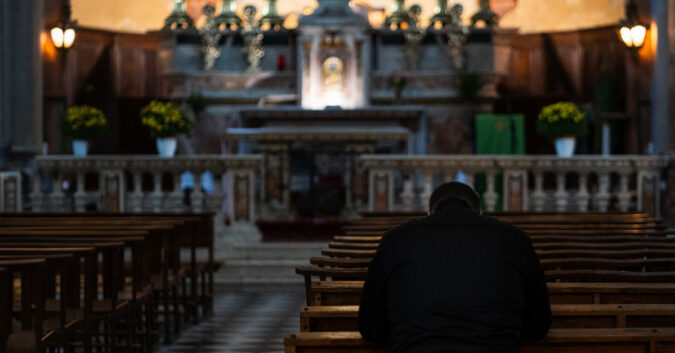
Recently, the Arizona Supreme Court unanimously ruled that clergy members are not required to report child abuse to authorities if they learn about it through confession or another confidential religious communication.
The decision stems from a lawsuit against The Church of Jesus Christ of Latter-day Saints and two of their bishops, who learned that a father in their congregation was sexually abusing his children — and never alerted police or child welfare officials. The abuse continued for years after the father first confessed.
Survivor advocates warn that the ruling gives religious institutions the power to decide when abuse stays secret, creating what one advocacy leader called a "confessional loophole" that predators can exploit.
At Sokolove Law, we believe no institution should be allowed to put secrecy ahead of children's safety. For decades, we've helped survivors of clergy sexual abuse hold powerful religious institutions accountable.
Behind the Arizona Child Abuse Case Ruling
In Bisbee, Arizona, Paul Adams, a U.S. Border Patrol agent, confessed to a local bishop in 2011 that he was sexually abusing his 5-year-old daughter. Adams was a member of The Church of Jesus Christ of Latter-day Saints (LDS), also known as the Mormon Church.
Adams confessed again in a second meeting with the bishop, this time with his wife present, and a third time during a church disciplinary proceeding. The church excommunicated Adams in 2013, but no one reported the abuse to authorities.
The abuse didn't stop. Adams continued harming his two young daughters, the second one beginning when she was an infant, for years and posted recordings of the abuse online.
It wasn't the church that finally ended the abuse — it was an international law enforcement investigation that traced a video of the abuse back to Adams in 2017. Ultimately, more than 3,000 videos of Adams abusing his children were uploaded to the internet.
Adams was arrested and confessed to law enforcement, but he died by suicide in jail before he could stand trial. His wife pleaded no contest to child abuse charges and was sentenced to two and a half years in prison.
In 2020, three of the Adams children sued the church and their bishops, arguing they violated Arizona child abuse laws by staying silent.
Breaking Down the Ruling in the Arizona LDS Abuse Case
Arizona law generally requires anyone who reasonably believes a child is being abused to report it immediately. However, the statute includes an exemption:
Clergy may withhold a report learned through confession or confidential communication if they deem it "reasonable and necessary" under their faith's doctrine.
What makes hiding child abuse necessary for any religious organization? The central question becomes who gets to decide whether a clergy member's silence was truly required by religious doctrine: the church itself or a judge and jury.
The court's ruling in the LDS Arizona abuse case established that:
- Courts cannot second-guess how a religious institution interprets their own doctrine when deciding whether a communication counts as a protected confession.
- Religious institutions decide who qualifies as "clergy" exempt from reporting requirements.
- The First Amendment bars juries from evaluating if clergy properly applied their faith's teachings in choosing not to report, absent fraud or collusion.
A Cochise County judge had dismissed the children's sexual abuse lawsuit in 2023, but an appeals court revived it in 2025, ruling that a jury should decide whether the protection no longer applied when the confession was repeated in front of non-clergy members.
The state Supreme Court reversed that decision and reinstated the dismissal. Writing for the unanimous court, Vice Chief Justice John R. Lopez IV said the reporting statute and First Amendment principles compelled a decision in the church's favor.
The children's Arizona sexual abuse lawyer said she intends to ask the U.S. Supreme Court to review the ruling.
Why the Arizona Mormon Church Abuse Ruling Matters for Families
Mandatory reporting laws exist because children rarely have the power to protect themselves.
Teachers, doctors, police officers, and other professionals who work with children are legally required to report suspected abuse, so authorities can step in.
For parents and caregivers, the takeaways are clear:
- Don't assume a report was made. If a child discloses abuse to a religious leader, that disclosure may never reach police or child protective services.
- You can report abuse yourself. Anyone can contact child protective services or law enforcement directly — you don't need permission from a religious institution.
- Documentation matters. Recording the date, the child's own words, and any witnesses can help investigators and attorneys later, even if a religious institution never comes forward.
This Arizona Mormon Church abuse ruling means that, within the state, a clergy member who learns of ongoing child abuse in a confidential religious setting can legally choose to stay silent — and the courts cannot question that choice.
“They just let it keep happening. They just said, ‘Hey, let’s excommunicate her father.’ It didn’t stop. ‘Let’s have them do therapy.’ It didn’t stop. ‘Hey, let’s forgive and forget and all this will go away.’ It didn’t go away.”
– MJ, Arizona Sexual Abuse Survivor
A Pattern of Secrecy in Religious Institutions
The Arizona sexual abuse lawsuit decision arrives amid a national battle over clergy reporting laws. In 2025, Washington state passed a law requiring clergy to report child abuse even when it's disclosed in confession — a measure the Catholic Church and the Trump administration quickly challenged in federal court.
For decades, religious institutions across the country have faced a reckoning over systemic child sexual abuse and the internal systems that kept it hidden.
Religious organizations linked to widespread sexual abuse include:
- The Catholic Church
- Jehovah's Witnesses
- Mormon Church (Church of Jesus Christ of Latter-day Saints)
- Southern Baptist Convention
Time and again, church leaders made aware of abuse have handled it internally rather than reporting it to authorities. When the law carves out exceptions to mandatory reporting, the most vulnerable often pay the price.
Childhood sexual abuse can cause lifelong harm, including anxiety, depression, and post-traumatic stress disorder (PTSD). Survivors deserve accountability — not legal structures that protect the institutions that failed them.
Find an Arizona Sexual Abuse Lawyer
Even when criminal reporting laws fall short, survivors of childhood sexual abuse may still be able to pursue justice through civil lawsuits. A civil claim can hold religious institutions financially accountable for enabling or concealing abuse — and help survivors access the resources they need to heal.
If you or someone you love is a survivor of clergy sexual abuse, you're not alone, and you have rights. Our experienced sexual abuse lawyers can handle every step of the legal process, from gathering evidence to filing your claim, so you can focus on healing.
We've secured more than $10.6 Billion total for clients harmed through no fault of their own, including survivors of sexual abuse.
Call (800) 995-1212 now or fill out our online form to get a free case review. There are no upfront costs or hourly fees to work with our team.