
Symptoms of the Final Stages of Mesothelioma
As mesothelioma progresses to its final stages, symptoms often become more intense as the cancer spreads and organ function begins to decline. Tumor growth, fluid buildup, and reduced oxygen levels all place increasing strain on the body.
While each patient’s experience is different, mesothelioma symptoms near death usually have much more of an effect on everyday life, especially as the cancer becomes harder to manage.
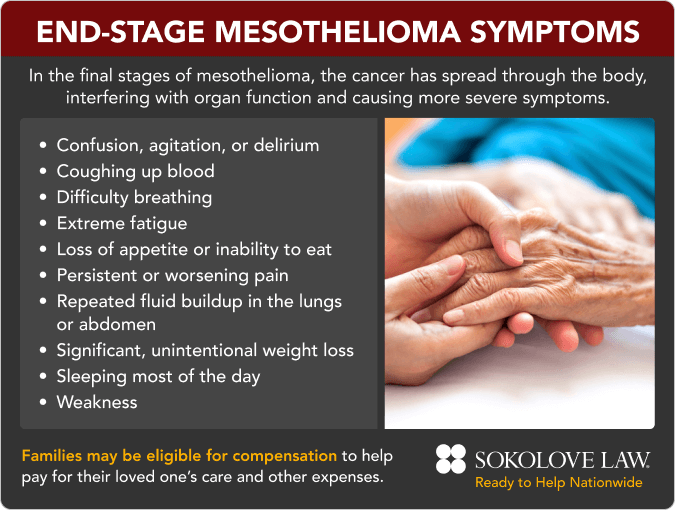
Mesothelioma symptoms near death may include:
- Changes in mood
- Coughing up blood
- Decreased urine output
- Delirium, confusion, or agitation
- Difficulty breathing
- Extreme fatigue
- Fluid in the lungs or abdomen that returns quickly after being drained
- Loss of appetite or trouble swallowing
- Muscle wasting (cachexia)
- Nausea and vomiting
- Night sweats
- Severe weight loss
- Significant chest or abdominal pain
- Weakness
When someone has end-stage mesothelioma, treatment goals often shift from extending lifespan to managing symptoms. Palliative care and hospice support focus on comfort, pain relief, and improving quality of life.
As a leading mesothelioma law firm since 1979, Sokolove Law has helped thousands of mesothelioma patients and their families secure compensation for treatments and support during the final stages of mesothelioma.
Since 1979, Sokolove Law has secured over $5.5 Billion for thousands of mesothelioma victims and their families.
Get a Free Case Review
What Are the Signs Mesothelioma Is Getting Worse?
When mesothelioma starts to get worse and reaches an advanced stage, patients may begin to struggle with everyday activities and find it challenging to stay comfortable.
Signs mesothelioma is getting worse may include:
- Becoming less able to communicate or respond to others
- Experiencing confusion or disorientation
- Having difficulty eating or drinking
- Losing the ability to walk or move around without assistance
- Needing help with basic personal care
- Rapidly losing weight without trying
- Spending most of the day sleeping
- Struggling to breathe, even while at rest
When patients exhibit signs of dying from mesothelioma, doctors may recommend shifting the treatment strategy from improving survival to boosting quality of life through palliative care or hospice.
How Quickly Does Mesothelioma Progress?
Mesothelioma is considered aggressive, meaning it tends to progress more quickly than many other cancers. After the initial onset of symptoms, the disease can metastasize and spread to other parts of the body within just a few months for some patients.
However, the speed at which the disease progresses varies widely based on factors like the type of mesothelioma, its stage at diagnosis, a patient’s overall health, and the tumor’s cell type.
Epithelioid mesothelioma typically progresses more slowly and may respond better to treatment, while sarcomatoid or biphasic mesothelioma tends to advance more rapidly, according to MD Anderson Cancer Center.
It’s important to get medical help before mesothelioma progression symptoms become more pronounced. Patients who undergo treatment often live at least twice as long as those who do not, according to the National Library of Medicine.
How Does Mesothelioma Kill You?
Generally speaking, mesothelioma can lead to death when tumors spread and interfere with the function of essential organs, eventually causing them to shut down.
There are several ways mesothelioma may become fatal:
- With pleural mesothelioma, tumors and fluid buildup in the chest can compress the lungs and reduce oxygen intake, which may lead to respiratory failure.
- Peritoneal mesothelioma can cause fluid accumulation in the abdomen, digestive issues, and severe malnutrition, leaving the body unable to absorb enough nutrients to sustain itself.
- Pericardial mesothelioma interferes with the heart’s ability to pump blood and may lead to heart failure, leaving the body’s organs and tissues without the oxygen-rich blood they need to function.
- Testicular mesothelioma can metastasize to the lymph nodes, brain, lungs, and beyond, ultimately overwhelming the body and causing organ failure.
The way mesothelioma becomes life-threatening can vary from patient to patient and may involve additional complications beyond those listed above.
In addition to direct organ damage, infections are also a threat to mesothelioma patients. With a weakened immune system, patients may be at risk of succumbing to pneumonia, sepsis, and more.
End-Stage Mesothelioma Symptoms by Type
Mesothelioma symptoms near death will vary based on which part of the body is affected by the cancer and where the tumors have spread to.
There are 4 main types of mesothelioma:
- Pleural mesothelioma, which forms in the lining of the lungs
- Peritoneal mesothelioma, which forms in the abdominal lining
- Pericardial mesothelioma, which forms in the lining of the heart
- Testicular mesothelioma, which forms in the lining of the testes
Recognizing late-stage symptoms of mesothelioma by type can help families better understand the disease and prepare for the changes ahead. Find out about near-death mesothelioma symptoms for each of the different types of this cancer below.
Pleural Mesothelioma Symptoms Near Death
Pleural mesothelioma is the most common type of this cancer. Because it forms in the lining of the lungs, patients often experience respiratory symptoms like shortness of breath or chest pain that progress into difficulty breathing and coughing up blood.
Pleural mesothelioma symptoms near death may include:
- Chest pain
- Coughing up blood
- Difficulty catching your breath or breathing, especially when lying down
- Extreme fatigue
- Heart palpitations
- Mood changes
- Night sweats
- Pleural effusions (fluid buildup in the lung lining)
- Severe appetite loss (anorexia)
- Significant weakness
- Shortness of breath (dyspnea)
- Sleeping for long periods (hypersomnolence)
- Swelling in the legs, ankles, or face (edema)

“We got up, and my husband said, ‘I just don’t feel good.’ I said we should probably go to the ER. The doctors found that there was over 2 liters of fluid on his left lung, and they were amazed that he was even able to breathe.”
– Dee, Wife of a Stage 4 Pleural Mesothelioma Patient
Pain and shortness of breath are among the most common symptoms reported by patients with late-stage pleural mesothelioma, according to the Journal of Clinical Medicine. Roughly 86% of patients experience shortness of breath and 83% complain of pain.
End-Stage Peritoneal Mesothelioma Symptoms
Peritoneal mesothelioma is the second most common type of this cancer. Because this cancer affects the lining of the abdomen, peritoneal mesothelioma symptoms near death may lead to digestive issues, lack of appetite, and pain that worsens as the cancer spreads.
Symptoms of end-stage peritoneal mesothelioma may include:
- Abdominal distention or bloating
- Abdominal pain
- Bowel obstruction
- Diarrhea
- Difficulty eating or severe loss of appetite (anorexia)
- Fluid buildup in the abdomen (ascites)
- Hyperactive delirium
- Nausea and vomiting
- Significant weight loss
- Sleeping for most of the day
- Weakness and muscle wasting (cachexia)

"When my wife would cook a meal, I'd only eat 2 or 3 bites and feel like I'd just eaten Thanksgiving dinner. My doctor told me I was bloated and sent me to get an ultrasound, where they discovered I had ascites."
– Dennis, Peritoneal Mesothelioma Patient & Firm Client
Certain end-stage mesothelioma symptoms are linked to a poorer prognosis overall. For example, peritoneal mesothelioma patients with ascites have an average survival time of just 7 months, compared to 39 months for those without this symptom, according to Scientific Reports.
Pericardial Mesothelioma Symptoms Near Death
Pericardial mesothelioma affects the lining of the heart (pericardium). In the final stages of this disease, tumors can interfere with heart function, reduce oxygen circulation, and cause serious complications.
Pericardial mesothelioma symptoms near death may include:
- Arrhythmias or palpitations
- Chest pain
- Cardiac tamponade (fluid around the heart that compresses it)
- Chest pain
- Constrictive pericarditis (heart lining becomes stiff, making it tough to pump blood)
- Difficulty breathing
- Extreme fatigue
- Fever
- Increased heart rate (tachycardia)
- Pericardial effusion (fluid buildup around the heart)
- Seizures
- Swelling of hands and feet
Since pericardial mesothelioma often progresses without any noticeable symptoms, the majority of cases are diagnosed at an advanced stage, according to Science Direct. At this point, patients frequently experience severe cardiac complications that may be fatal, including heart failure.
Testicular Mesothelioma Symptoms Near Death
Testicular mesothelioma is extremely rare and develops in the lining of the testes. While early symptoms may be mild or painless, advanced stages of the disease can lead to significant discomfort and complications.
Testicular mesothelioma symptoms near death may include:
- Hard mass in the testicle
- Hydrocele (fluid buildup in the testicle lining)
- Necrotic scrotal tissue
- Significant pain
During end-stage testicular mesothelioma, the cancer spreads to other parts of the body, causing more pain and potentially requiring additional treatment.
In one case, a patient underwent hip and thigh surgery after his mesothelioma spread beyond the testicle. Doctors discovered the cancer had also reached the lung and pubic areas, and the patient died a month later.
Emotional Challenges of Mesothelioma End Stages
Facing end-stage mesothelioma can be emotionally overwhelming. In addition to physical pain and discomfort, many patients report significant mental health concerns as a result of their diagnosis and uncertainty about the future.
Other factors may make the emotional aspects of late-stage mesothelioma worse. Patients’ anxieties can worsen due to not knowing how long they’ll live, when they might die, how their family members will get on without them, and feeling out of control since the cancer can’t be cured, per the journal Palliative Medicine.
End-stage mesothelioma may lead to mental health challenges like:
- Anxiety
- Depression
- Denial about the cancer and its seriousness
- Hopelessness
- Loneliness or isolation
- Memory or concentration problems
- Post-traumatic stress disorder
- Suicidal ideation
Since the life expectancy of late-stage mesothelioma can be poor, patients have a nearly 9 times greater risk of suicide compared to those with other types of cancers, according to Psycho-Oncology.
Patients and their families can use many different types of coping skills to manage overwhelming emotions during the final stages of mesothelioma. These include seeking mental health counseling, practicing acceptance-based coping techniques, and putting financial affairs in order.
What to Expect During the Final Weeks of End-Stage Mesothelioma
The last days and weeks of each mesothelioma patient’s life are unique. As the disease progresses, the body begins to slow down, and patients often experience significant changes in energy, appetite, and breathing. Many require full-time care due to worsening symptoms
Complications related to the respiratory system, bowel functions, and more often occur. Patients may sleep more during the day, have difficulty breathing, and struggle to eat or drink. Pain may also become more noticeable.
Mesothelioma patients will likely feel some discomfort at the end of life, even with palliative measures. Only 12.5% of pleural mesothelioma patients are free from pain at the time of death, according to the Journal of Clinical Medicine.
The majority of mesothelioma patients spend their final weeks in a hospital or hospice facility, where treatments can be provided to help them feel as comfortable as possible.
Is Dying from Mesothelioma Painful?
Patients with end-stage mesothelioma may feel pain as tumors grow and press on nearby organs, nerves, and tissues. Fluid buildup in the lungs or abdomen can also cause pressure and increase discomfort as the disease progresses.
Over 87% of pleural mesothelioma patients report experiencing pain toward the end of their lives, according to the Journal of Clinical Medicine.
However, help is available. Doctors and hospice staff can offer multiple ways to control discomfort during the final stages of mesothelioma, including pain medications, nerve-targeting drugs, and procedures to drain excess fluid.
With proper palliative care, patients may experience meaningful pain relief and improved comfort, even in advanced stages of this disease.
Mesothelioma Death Process
Mesothelioma typically progresses through 4 stages, starting with localized tumors and gradually spreading to surrounding tissues and organs.
As the cancer advances, symptoms typically worsen, and the body becomes increasingly affected. By the final stage, this disease can impact nearly every system in the body, leading to a range of physical challenges and complications.
Mesothelioma death stages may involve:
- Increase in tumors and fluid build-up: Growing tumors can press on organs and nerves, causing pain. Fluid may accumulate in the chest or abdomen, making breathing or eating more difficult.
- Weakness and lack of independence: Patients often become weaker and may need help with walking, bathing, or other daily activities. Fatigue increases, and much of the day may be spent resting or sleeping.
- Trouble eating and breathing: Advanced mesothelioma can make it hard to eat, drink, or get enough oxygen. This can lead to weight loss, malnutrition, and shortness of breath, even while resting.
- Additional complications: As the disease progresses, vital organs may begin to fail, including the heart, kidneys, liver, or lungs.
- End-of-life care: Most patients spend their final weeks in a hospital, hospice, or at home with palliative care. These services can focus on comfort, pain relief, easing breathing, and emotional support for both patients and families.
In the final days of life, mesothelioma patients may become increasingly withdrawn or sleepy. Families may notice changes in breathing, lower responsiveness, or less interest in food and drink. While this can be difficult to witness, palliative care teams are trained to provide comfort and support during this time.
How Long Does Mesothelioma Take to Kill?
The prognosis for mesothelioma is usually poor, as many patients don’t receive a diagnosis until the cancer has reached an advanced stage.
While survival times vary based on several factors, patients diagnosed at a late stage often pass away within a little over 1 year after diagnosis, according to Cancer Medicine.
Average mesothelioma life expectancy by type includes:
- Pleural mesothelioma: 12-21 months
- Peritoneal mesothelioma: 53 months
- Pericardial mesothelioma: 6 months
- Testicular mesothelioma: 26-36 months
Some mesothelioma survivors have far exceeded these averages, surviving for 5, 10, or even 20+ years after diagnosis. Early detection and prompt treatment can potentially help improve survival outcomes.
Palliative Care for Mesothelioma Symptoms Near Death
Palliative care is often the primary form of treatment recommended for patients experiencing the final stages of this cancer. The main goal of palliative care is to provide mesothelioma patients with the best possible quality of life by easing their symptoms.
Over 40% of pleural mesothelioma patients receive palliative care, as noted by Palliative Medicine. Roughly 1 in 3 mesothelioma patients choose palliative care over more aggressive treatments due to concerns about side effects and limited expected survival, according to BMC Palliative Care.
Palliative care options for mesothelioma symptoms near death may include:
- Fluid drainage procedures: Many mesothelioma patients experience fluid buildup in their lung or abdominal lining, which can cause pain, loss of appetite, and bloating. Procedures like thoracentesis and paracentesis can drain fluid to reduce end-stage mesothelioma symptoms, according to Cleveland Clinic.
- Oxygen therapy: Supplemental oxygen can help improve breathing among mesothelioma patients experiencing chronic shortness of breath, according to the Mayo Clinic.
- Pain-relieving medications: Doctors may prescribe pain management medications ranging from acetaminophen to opioids based on a mesothelioma patient’s level of pain, as noted in Lung Cancer: Targets and Therapy.
- Other palliative options: Accessing alternative or complementary mesothelioma treatments, physical therapy, and support group counseling can all help improve emotional well-being and give end-stage mesothelioma patients a better sense of control, according to Palliative Medicine.
Some treatments, like chemotherapy, radiation, or immunotherapy, may also be used as palliative care options to relieve symptoms as a patient’s disease progresses, though not always within the final few weeks of their life.
“I think it's extremely important to get a palliative care team involved at any point of the cancer journey for our patients, whether they have early-stage cancer or late-stage cancer, whether they're receiving treatment, or whether they're leaning more towards the hospice approach.”
– Dr. Logan Roof, Mesothelioma Specialist
At Sokolove Law, our mesothelioma lawyers work with our on-staff medical team and registered nurses who can help you understand your mesothelioma diagnosis and treatment options.
Where to Get Care for the Final Stage of Mesothelioma
Late-stage mesothelioma patients can receive palliative care for their symptoms in a variety of settings. Consulting with their medical team and family can help them determine which option best meets their needs.
Nearly 50% of pleural mesothelioma patients pass away at the hospital, 33% die in hospice care, and 14% pass away at home, according to the Journal of Clinical Medicine.
Here’s where to get care for symptoms of the final stage of mesothelioma:
- At home: Patients in the end stages of mesothelioma may prefer to get palliative care at home. This is one of the most common palliative care settings, with approximately 34% of patients receiving care in their home, according to Palliative Medicine.
- At a hospice facility: Patients can receive palliative care in hospice settings, which are specifically tailored to managing pain at the end of life. Roughly 1 in 10 mesothelioma patients receive hospice care, as noted by Palliative Medicine.
- In the hospital: Cancer centers across the country have palliative care specialists on staff to help manage mesothelioma symptoms near death. More than 25% of mesothelioma patients receive pain-relieving care in the hospital, per Palliative Medicine.
The majority of mesothelioma patients incur end-of-life treatment costs that can affect their families long after they're gone. In the U.S., the last month of life in a hospital setting costs over $32,000 on average, and hospice care can cost nearly $18,000 a month, according to the American Bar Association.
At Sokolove Law, we may be able to help you file a claim and pursue mesothelioma compensation for expenses related to end-stage mesothelioma care, including palliative treatments, hospital stays, and more.
Our team can handle every step of the process on your behalf, so you can focus on your health and family.
Billions Recovered Nationwide
We’ve recovered over $5.5 Billion for thousands of mesothelioma patients and their families nationwide. Let us get you the results you deserve.
Financial Support for End-Stage Mesothelioma
Treating mesothelioma can be very expensive, with costs reaching over $400,000 annually in some cases. Unfortunately, insurance may not cover everything, like the cost of traveling to mesothelioma specialists and medical equipment.
At Sokolove Law, our mesothelioma attorneys may be able to help you file a legal claim against the asbestos-related companies responsible for your illness. To date, we’ve secured more than $5.5 Billion for families affected by mesothelioma.
Find out more about financial support for end-stage mesothelioma:
- $1 Million+ on average awarded from lawsuit settlements
- No upfront costs — families pay nothing unless we recover compensation
- Some clients start receiving payments in as few as 90 days

“My kids are going to be taken care of, so there’s peace of mind knowing I won’t have to worry about them.”
– John, Late-Stage Mesothelioma Patient & Firm Client
More than 65% of mesothelioma patients who pursued compensation claims did so to keep their families financially secure. Contact us now to find out if we may be able to help you.
The Importance of Starting the Legal Process Early
As mesothelioma reaches its final stages, medical needs often increase rapidly. Nearly 70% have an unplanned hospital admission, according to Palliative Medicine, leading to more unexpected costs.
Filing a legal claim while the patient is still living can make a meaningful difference. Courts often fast-track mesothelioma lawsuits for living patients, which may allow compensation to be secured sooner — sometimes even while the patient is still alive.
If a patient passes away before their case is resolved, their claim doesn’t end. Our attorneys can continue the case on behalf of the family so that spouses, children, and dependents can still receive the financial support their loved one fought for.
Compensation from a mesothelioma claim can help cover medical bills, hospice care, and funeral and burial expenses. For many patients, filing a claim provides them with a sense of comfort knowing their loved ones will be taken care of.
Caregiving for Mesothelioma Symptoms Near Death
When someone is in the final stages of mesothelioma, their loved ones often play a significant role in caregiving and managing painful symptoms. Caring for someone nearing the end of life can feel overwhelming, but there are ways to manage stress while ensuring the patient’s needs are met.
Here are caregiving tips for late-stage mesothelioma symptoms:
- Communicate with doctors and nurses: Caregivers may need to act on a patient's behalf. This may involve working with the patient's doctors and nurses to guide treatment and care plans, according to the Mesothelioma Applied Research Foundation.
- Get support: Both patients and caregivers can benefit from connecting with other families impacted by mesothelioma. This can ease anxiety and depression, which often hit hard when a loved one is facing the end of life due to mesothelioma.
- Manage medications: When mesothelioma patients are in the last stages, they may rely on caregivers to administer medications like painkillers.
Caregivers of mesothelioma patients also need to make sure they’re able to rest and recharge. This will allow them to care for the patient more effectively.
“It is important for you to be aware of your body’s needs and take care of yourself. Reach out to other family members to step in and support you and your loved one when you feel the need to do so.”
– American Cancer Society
Get Support for Mesothelioma Symptoms Near Death
Mesothelioma symptoms near death may be managed with proper medical care. If you or a loved one is experiencing late-stage mesothelioma symptoms, you may qualify for compensation to afford treatments.
At Sokolove Law, we have registered nurses on staff ready to review your treatment options and attorneys who’ll pursue the payouts you need for treatment expenses.
To date, our mesothelioma lawyers have secured over $5.5 Billion for clients affected by this cancer, and there are no upfront costs or hourly fees to work with us.
Don't wait to reach out if you or someone you love is experiencing mesothelioma symptoms near death. The more time passes, the fewer legal options your family may have to get compensation and justice.
Call (800) 647-3434 now or fill out our contact form to find out how we may be able to assist you during this difficult time.
Final Stage Mesothelioma FAQs
Is mesothelioma a death sentence?
Not necessarily. While there is currently no cure for mesothelioma, some patients have lived meaningful, active lives for years and even decades after their initial diagnosis.
"So many people go on Dr. Google, and there's a lot of misinformation and information that doesn't apply to that particular individual,” explained Dr. Raja Flores, a mesothelioma specialist at Mount Sinai Hospital. “They tend to look at the worst — but I tell them this is not a guaranteed death sentence.”
If you or a loved one has mesothelioma, we’re here for you. Our on-staff nurses can help you understand your diagnosis, explore treatment options, and connect with experienced specialists. We can also help families seek compensation for medical care and other expenses.
Contact Sokolove Law now to find out how we may be able to support your family.
What are mesothelioma symptoms near death?
In the final stage of mesothelioma, patients often experience difficulty breathing, extreme fatigue, loss of appetite, and significant physical weakness as the cancer spreads and the body begins to slow down.
End-stage mesothelioma symptoms are typically very severe and can greatly impact a patient's quality of life without medical care.
Mesothelioma symptoms near death may include:
- Abdominal pain
- Chest pain
- Diarrhea and vomiting
- Fluid buildup in the lining of the lungs or abdomen
- Insomnia
- Loss of appetite
- Nausea
- Severe fatigue
- Shortness of breath
- Significant weight loss
These symptoms vary depending on each mesothelioma patient’s unique diagnosis. Hospice or palliative care teams can help manage discomfort and support both the patient and their family during this time.
Call (800) 647-3434 now to see if you may be eligible to pursue compensation for mesothelioma treatments that can ease symptoms and improve your quality of life.
How long are the final stages of mesothelioma?
Stages 3 and 4 are considered the final phases of mesothelioma. In many cases, the cancer may advance from stage 3 to stage 4 within several months as it continues to spread.
Patients who receive treatment may live for about 16 months after a stage 3 diagnosis and roughly 12 months after reaching stage 4, according to Frontiers in Oncology. However, some patients with advanced mesothelioma go on to live much longer.
Our mesothelioma client John Stahl is still alive today after his stage 4 mesothelioma diagnosis in 2019, thanks to chemotherapy.
If mesothelioma doctors don’t believe that more aggressive treatments are appropriate in your case, they may recommend hospice or palliative care to ease symptoms and provide the best quality of life possible.
What happens when someone is dying from mesothelioma?
When someone is dying from mesothelioma, the cancer spreads extensively throughout the body and prevents essential organs like the brain, heart, and lungs from functioning properly.
Mesothelioma symptoms near death may include difficulty staying awake or maintaining consciousness, trouble breathing due to fluid buildup in the lungs, not being able to eat or drink, and significant weight loss.
Patients are often hospitalized or cared for in a hospice setting, where medical staff focus on comfort, managing pain, and providing oxygen or fluids.
Are there seizures with the final stage of mesothelioma?
Some mesothelioma patients may suffer seizures in the final stages of this disease. If the cancer spreads to your brain, tumors may press on tissue and disrupt normal brain function, leading to seizures.
In one case, a patient was admitted to the hospital following a seizure. Doctors determined the seizure was caused by metastatic mesothelioma, according to the Western Journal of Emergency Medicine. The patient died soon after.
Is mesothelioma a painful death?
In the end stages of mesothelioma, most patients experience some level of pain as tumors grow and press on organs, nerves, and surrounding tissue. Fluid buildup in the lungs or abdomen may also create pressure and discomfort.
Palliative care and hospice support can help manage symptoms. Pain-relieving medications, procedures to drain fluid, and other treatments can make patients more comfortable and improve quality of life in the last weeks and days.
Late-stage patients may worry about what will happen to their loved ones or how they’ll pay for medical expenses. At Sokolove Law, we help families fight for legal compensation so patients can focus on their health.
Call (800) 647-3434 now to find out if you qualify.
How can families make the end stages of mesothelioma more comfortable?
Family members often play important caregiving roles for loved ones experiencing mesothelioma symptoms near death. They can serve as advocates for the patient and ensure that they are as comfortable as possible.
Families can help late-stage mesothelioma patients by:
- Assisting with basic tasks like putting on clothes and bathing
- Coordinating care plans on their behalf with doctors
- Doing household chores
- Driving the patient to and from appointments
- Managing and providing medications
- Planning and preparing healthy meals
All of these options can go a long way to easing end stages of mesothelioma symptoms and helping patients feel better.
What is mesothelioma wrongful death?
Mesothelioma wrongful death claims are filed against the asbestos-related companies responsible for your loved one’s illness. For decades, many of these companies knew their products posed serious health risks. However, they chose not to warn workers or the public in order to keep making money.
Filing a wrongful death claim can allow families to seek compensation, hold negligent companies accountable, and shine a light on corporate wrongdoing.
Can families file mesothelioma claims after a loved one’s death?
Yes. Families may be able to file a mesothelioma wrongful death claim after a loved one has passed away. These claims may award compensation for medical bills, funeral costs, and pain and suffering.
Beyond financial support, pursuing a claim can also provide a sense of justice and hold asbestos-related companies accountable for their negligence.
At Sokolove Law, we have helped families across the country file mesothelioma wrongful death lawsuits. Get a free case review now.
What are common final stages of mesothelioma symptoms?
Some of the most common symptoms of mesothelioma near death include shortness of breath, abdominal or chest pain, weight or muscle loss, and fatigue.
These symptoms affect the majority of end-stage mesothelioma patients. For instance, about 86% of patients with late-stage pleural mesothelioma suffered from breathlessness and 83% had pain, according to the Journal of Clinical Medicine.
Palliative care options like medication can help to relieve mesothelioma symptoms near death so patients can live as comfortably as possible.
What is the difference between mesothelioma palliative care and hospice?
Palliative care can be used from the start of a mesothelioma diagnosis through the end of life to manage symptoms and support quality of life. It can be provided on its own or alongside treatments like chemotherapy and radiation.
Hospice care is specifically for those nearing the end of life, when treatments to cure mesothelioma have stopped and comfort becomes the main focus.
Both approaches can help relieve painful mesothelioma symptoms near death and allow patients to live out the rest of their days with dignity.
