
What Is Epithelioid Mesothelioma?
Epithelioid malignant mesothelioma is one of three mesothelioma cell types. This type is also known as epithelial mesothelioma, according to the U.S. National Library of Medicine.
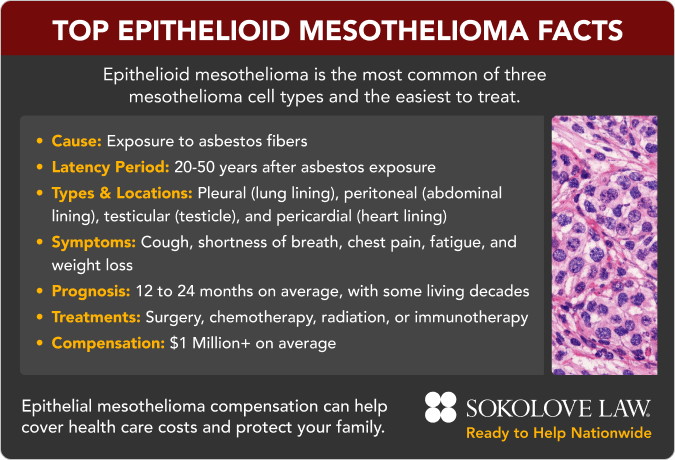
Doctors can identify specific types of mesothelioma by reviewing tissue or fluid samples with a microscope. Epithelioid mesothelioma cells, which are the most common type, look like cubes or ovals, according to Frontiers in Oncology. The cells stick together, making them easier to treat.
Quick Epithelioid Mesothelioma Facts
- 6 out of 10 mesothelioma patients have epithelioid mesothelioma, per the American Cancer Society (ACS).
- Epithelial accounts for 60% to 80% of pleural mesothelioma diagnoses, which impact the lung lining, per Cleveland Clinic
- 74% to 90% and peritoneal mesothelioma cases, which develop in the abdominal lining, per the Annals of Gastroenterology.
- Epithelioid mesothelioma has a better health outlook than the other cell types, those being sarcomatoid mesothelioma or biphasic mesothelioma, per the U.S. National Library of Medicine.
- The average life expectancy for epithelial mesothelioma ranges from 12 to 24 months, per the Surveillance, Epidemiology, and End Results (SEER) Program.
- Patients with mesothelioma epithelioid type may be more likely to qualify for aggressive treatments like surgery, according to the University of Maryland Medical Center.
- Treatment options for malignant mesothelioma epithelioid type may include surgery, chemotherapy, radiation, and immunotherapy.
At Sokolove Law, our mesothelioma law firm has on-staff nurses who can review your test results to help you better understand your epithelial mesothelioma diagnosis and treatment options.
We’ve helped more than 9,600 families affected by epithelial mesothelioma and other asbestos-related diseases secure compensation, find specialists, and access support during this difficult time.
Since 1979, Sokolove Law has secured over $5.6 Billion for thousands of mesothelioma victims and their families.
Get a Free Case Review
Epithelioid Mesothelioma Causes
Epithelioid mesothelioma is caused by breathing in or swallowing asbestos. This fibrous mineral was widely used in construction, shipbuilding, manufacturing, and other industries throughout much of the 20th century.
Epithelial mesothelioma develops when the body’s healthy epithelial cells, which line organs such as the lungs and abdomen, are damaged by asbestos. It can take 20-50 years after exposure for this cancer to form.
“When you know this could have been prevented, it makes things just that much harder to bear. No one should have to endure the pain of a mesothelioma diagnosis.”
– Karen, Wife of Epithelioid Mesothelioma Patient & Firm Client
Many workers didn’t realize asbestos exposure could lead to epithelial mesothelioma. This is because manufacturers of asbestos-containing products hid the health risks for decades, putting profits over the safety of workers and consumers.
Epithelioid Mesothelioma Symptoms
Epithelioid mesothelioma can cause symptoms such as difficulty breathing, chest pain, and pleural effusions (fluid buildup in the lung lining), according to UPMC Hillman Cancer Center. Epithelioid mesothelioma symptoms may vary depending on where tumors form in the body.
Possible epithelial mesothelioma symptoms include:
- Abdominal bloating and pain
- A dry cough
- Ascites (abdominal fluid buildup)
- Chest pain
- Constipation and diarrhea
- Fatigue
- Loss of appetite
- Nausea and vomiting
- Pleural effusions
- Shortness of breath
- Weight loss
If you notice potential epithelioid mesothelioma symptoms and have a history of asbestos exposure, talk to a doctor right away. Early detection can help catch mesothelioma before it spreads to other parts of the body, making it easier to treat.
Epithelioid Mesothelioma Prognosis
Epithelioid mesothelioma prognosis is the projected health outcome following a diagnosis. In general, the overall prognosis for mesothelioma is poor.
However, those with epithelial malignant mesothelioma typically have a more favorable outlook compared to patients with sarcomatoid or biphasic mesothelioma.
Since epithelioid mesothelioma cancer is often more responsive to aggressive treatments like surgery, patients may have a better chance of achieving long-term survival.

“The epithelioid have the best, sarcomatoid have the worst, and the mixed are somewhere in between. And that’s probably the single biggest predictor of survival.”
– Dr. Raja Flores, Mesothelioma Specialist
Epithelial mesothelioma prognosis is measured using life expectancy and survival rate, which doctors use to estimate outcomes and guide treatment plans. Learn about each below.
Epithelioid Mesothelioma Life Expectancy
Mesothelioma life expectancy is the average amount of time a patient lives after being diagnosed with this cancer. The epithelial malignant mesothelioma life expectancy ranges from 12 to 24 months on average, per the SEER Program.
However, life expectancy for epithelioid mesothelioma can vary significantly based on factors like the cancer’s location, stage at the time of diagnosis, and available treatment options.
For instance, peritoneal epithelial mesothelioma patients who underwent cytoreduction with HIPEC had an overall survival time of 51.5 months, or more than 4 years, per AME Surgical Journal.
Epithelioid Mesothelioma Survival Rate
Mesothelioma survival rate is the percentage of patients still living after a certain length of time and is typically expressed in years. Epithelioid mesothelioma survival rates are higher than those of biphasic or sarcomatoid mesothelioma, according to Penn Medicine.
For epithelioid mesothelioma patients treated with surgery, the 2-year survival rate is 45%, and the 5-year survival rate is 14%, according to Cancer Medicine.
Epithelioid Mesothelioma Diagnosis
Diagnosing mesothelioma starts by reviewing any history of asbestos exposure, including job sites that may have used asbestos-containing products, per Dana-Farber Cancer Institute.
Doctors use several tests to confirm a diagnosis of epithelioid mesothelioma and rule out more common health issues. You’ll also get a physical exam, and a pulmonary function test may be used if you have lung-related symptoms.
From there, doctors may use imaging tests to look for tumors, like:
- CT scans
- Echocardiograms
- MRI scans
- PET scans
- X-rays
The only way to confirm an epithelioid mesothelioma diagnosis is through a biopsy, according to Penn Medicine. During a biopsy, doctors remove tissue or fluid samples for a pathologist to examine under a microscope. This allows them to determine if epithelial mesothelioma cells are present.
Diagnosed with Mesothelioma?
Sokolove Law can help mesothelioma patients pursue compensation for treatments and other expenses.
Differential Diagnosis for Epithelioid Mesothelioma
Mesothelioma is a rare cancer. In some cases, doctors may have trouble distinguishing epithelial mesothelioma cells on a biopsy. Without care, this may potentially lead to a mesothelioma misdiagnosis.
Misdiagnosing mesothelioma can contribute to a worse health outlook, as the patient could get treatment for the wrong health issue as their cancer continues to spread.
Differential diagnoses for epithelioid mesothelioma may include:
- Adenocarcinoma
- Biphasic mesothelioma
- Sarcomatoid mesothelioma
- Squamous cell carcinoma
To ensure an accurate diagnosis, doctors can use immunohistochemistry tests to look for proteins called biomarkers on the surface of cancer cells. If specific biomarkers are present or absent, they can confirm whether the patient has epithelial mesothelioma.
Epithelioid mesothelioma immunohistochemistry tests look for biomarkers like MOC-31 and claudin-4, according to Translational Lung Cancer Research.
Malignant Mesothelioma Epithelioid Types
Doctors classify cases of mesothelioma into one of four different types depending on where cancer tumors first develop in the body, including the lining of the:
- Lungs (pleural mesothelioma)
- Abdomen (peritoneal mesothelioma)
- Heart (pericardial mesothelioma)
- Testicular (testicular mesothelioma)
Any type of mesothelioma could be made up of epithelial cells, regardless of its location in the body. Learn more about epithelial mesothelioma tumors by type below.
Epithelioid Pleural Mesothelioma
Malignant epithelioid pleural mesothelioma develops in the lining of the lungs (pleura). Pleural mesothelioma is the most common type, accounting for over 75% of cases, per the ACS.
Between 60% to 80% of pleural mesothelioma patients have epithelial mesothelioma, according to the Cleveland Clinic.
Patients with epithelioid pleural mesothelioma may qualify for more aggressive treatments like surgery, which could potentially help improve the chances of long-term survival, according to Translational Lung Cancer.
Epithelioid Peritoneal Mesothelioma
Malignant epithelioid peritoneal mesothelioma develops in the abdominal cavity lining (peritoneum). Peritoneal mesothelioma is the second-most common type of this cancer, making up 10% to 15% of diagnoses, per the Journal of Investigative Medicine High Impact Case Reports.
Between 75% to 90% of all peritoneal mesothelioma tumors are epithelial cells, as noted by the Annals of Gastroenterology. Doctors typically use a combination of treatments to help epithelial peritoneal mesothelioma patients live longer.

“So, typically for epithelioid, which is the most common type of peritoneal mesothelioma, we offer surgery up front, if they have resectable disease, followed by adjuvant chemotherapy or immunotherapy, depending on whether we're able to remove it or not.”
– Dr. Deepa Magge, Mesothelioma Specialist
Pericardial Epithelioid Mesothelioma
Pericardial mesothelioma is a very rare form of this cancer that affects the lining of the heart. Epithelioid is the most common cell type in patients with pericardial mesothelioma, according to a Cancers study.
This type has the worst overall health outlook, with patients living just 2.5 to 6 months on average regardless of their tumor’s cell type, per Modern Pathology.
Testicular Epithelial Mesothelioma
Testicular mesothelioma develops in the tunica vaginalis, or the lining of the testicles. Roughly 75% of all testicular mesothelioma patients have the epithelial cell type, per Oncology Letters.
This type is the rarest, with fewer than 300 cases reported. However, long-term survival figures are encouraging when compared to other types. Approximately 49% of patients with testicular mesothelioma are still alive 5 years later.
Testicular epithelioid mesothelioma patients tend to have better health outcomes compared to those with the biphasic cell type, according to Urology.
What Is the Difference Between Epithelioid vs. Sarcomatoid Mesothelioma?
Epithelioid mesothelioma is much less aggressive than sarcomatoid mesothelioma, making it easier to treat and giving patients a better overall health outlook.
| Epithelioid Mesothelioma | Sarcomatoid Mesothelioma |
|---|---|
| Most common mesothelioma cancer cell type, making up 60% of diagnoses. | Rarest mesothelioma cell type, accounting for just 10% of all cases. |
| Epithelial cells stick together, which makes them less likely to spread and easier to treat. | Sarcomatoid cells don't stick together easily, so they have a worse health outlook and are harder to treat. |
| Cells look like cubes or ovals under a microscope. | Cells are spindle-shaped. |
Patients can also have biphasic mesothelioma, which occurs when doctors find both epithelial and sarcomatoid cells within the same tumor.
Biphasic mesothelioma is typically easier to treat if there are more epithelial cells than sarcomatoid ones. This type accounts for 30% of diagnoses, per the ACS.
Epithelioid Mesothelioma Stages
After an epithelioid diagnosis is confirmed, doctors will look to determine the stage of the cancer. Epithelial mesothelioma staging systems play a big role in shaping a patient’s treatment plan.
Having epithelial mesothelioma as well as a lower stage of cancer are considered favorable prognostic factors. Patients with early-stage cancer have more treatment options available, so they could potentially live longer.
Epithelioid mesothelioma staging includes:
- Stage 1: In cases of stage 1 epithelial mesothelioma, tumors have not spread from where they started, according to the University of Texas MD Anderson Cancer Center.
- Stage 2: By stage 2, the cancer has started to reach nearby lymph nodes and other structures in the body. However, treatments like surgery are still possible, according to Moffitt Cancer Center.
- Stage 3: Epithelioid mesothelioma stage 3 has spread even further through the abdomen or chest, and major treatments such as surgery may or may not be available as a result.
- Stage 4: Also known as metastatic epithelioid mesothelioma, stage 4 epithelial mesothelioma tumors spread to distant organs like the liver or brain, giving patients fewer treatment options, per Moffitt Cancer Center. However, some stage 4 epithelioid mesothelioma patients have improved their life expectancy with options like chemotherapy.
Mesothelioma is often not diagnosed until it's reached later stages, according to Penn Medicine. Mild symptoms are often mistaken for less serious health issues, and many patients are only diagnosed with metastatic cancer.
If you were exposed to asbestos decades ago and are now experiencing possible symptoms, don’t wait. Seeing a doctor promptly could potentially help diagnose you in an earlier epithelioid mesothelioma stage, when the cancer may be easier to treat.
Want to Talk to a Nurse?
Get in touch with one of our registered nurses who can answer any questions about your diagnosis or treatment options.
Epithelioid Mesothelioma Treatment
Epithelial mesothelioma tends to be the most easily treated mesothelioma cell type, per the Cleveland Clinic. This is because epithelioid cells tend to collect together, meaning they’re slower to spread.
Doctors usually recommend using multiple therapies in a multimodal treatment plan to destroy as much of the cancer as possible.
Common epithelioid mesothelioma treatment options include:
- Chemotherapy
- Immunotherapy
- Radiation therapy
- Surgery
Sokolove Law has registered nurses on staff who can help you understand your mesothelioma diagnosis and treatment options.
Find out more about epithelial mesothelioma treatment options that may be available to you or someone you love.
Epithelioid Mesothelioma Surgery
Epithelioid mesothelioma is more responsive to surgery compared to sarcomatoid or biphasic mesothelioma, according to doctors at the University of Maryland Medical Center.
Specialists can use different types of surgeries to remove as much of the mesothelioma as possible and potentially improve patient survival times.
The most common epithelioid mesothelioma surgery options include:
- Cytoreduction with heated chemotherapy (HIPEC): Used to treat peritoneal mesothelioma, this procedure involves surgically removing tumors from the abdominal cavity and then bathing the site with warm chemotherapy drugs to destroy microscopic cancer cells left behind. Patients with epithelial peritoneal mesothelioma lived for 51.5 months on average with this surgery, according to AME Surgical Journal.
- Extrapleural pneumonectomy (EPP): This surgery is an option for those with pleural mesothelioma and involves the removal of all visible cancer tumors, the lung closest to them, and parts of the heart lining, diaphragm, and lung lining. The median survival time for epithelioid pleural mesothelioma patients treated with an EPP is 24 months or 2 years, according to Translational Lung Cancer Research.
- Pleurectomy/decortication (P/D): This is another type of surgery for pleural mesothelioma. Doctors remove the lining of the lungs and all of the cancer that they can see, but don’t remove either lung. When combined with additional chemotherapy, epithelial pleural mesothelioma patients had a median survival of 38.1 months, per Translational Lung Cancer Research.
Specialists can assess each patient's case and determine whether epithelioid mesothelioma surgery may be the most appropriate treatment.

“The best candidates for treatment are otherwise healthy patients with limited disease. The sarcomatoid patients are not great candidates for surgeries like cytoreduction and HIPEC. Their outcomes are not good, even if you are maximally aggressive. So the best patients are going to be probably the epithelioid types.”
– Dr. Edward Levine, Mesothelioma Specialist
Epithelioid Mesothelioma Radiation Therapy
Radiation targets cancer cells with high-energy beams. In epithelioid mesothelioma, radiation is often used to:
- Reduce pain
- Shrink localized tumors
- Improve survival time when used in combination with surgery
Notably, surgery for mesothelioma after radiation therapy (SMART) led to a median survival of 36 months or 3 years in epithelial pleural patients, according to Communications Biology.
Chemotherapy for Epithelioid Mesothelioma
Chemotherapy involves the use of medications to destroy cancer cells and shrink tumors. Mesothelioma chemotherapy can be given systemically through the body or regionally near a surgery site, according to Moffitt Cancer Center.
When epithelioid mesothelioma patients receive chemotherapy as a first treatment, the median overall survival time is 26.7 months, or more than 2 years, according to Scientific Reports.
Epithelioid mesothelioma patients treated with chemotherapy have an average progression-free survival (time after treatment where the cancer doesn’t spread) of 4.8 months, which is longer than the other cell types.

“Patients who have epithelioid histology, we know that chemotherapy can work well for them. Things like carboplatin and pemetrexed are studied in mesothelioma and have great outcomes in epithelial histology.”
– Dr. Logan Roof, Mesothelioma Specialist
Immunotherapy for Epithelioid Mesothelioma
Immunotherapy helps the body’s immune system recognize and attack cancer cells. In the groundbreaking CheckMate 743 trial, which used the immunotherapies nivolumab (Opdivo®) and ipilimumab (Yervoy®) along with chemotherapy, epithelioid mesothelioma patients had a median overall survival of 18.7 months.
Clinical trials continue to study how different immunotherapy drugs can benefit mesothelioma patients. An immunotherapy called durvalumab led to an overall survival time of 23.4 months among epithelioid patients in a recent trial, according to Nature.
Epithelial patients in this study also had a better response rate compared to non-epithelioid cell types, meaning the cancer shrank or stopped growing in more of these patients.
Palliative Care for Epithelioid Mesothelioma
Palliative care focuses on comfort and symptom relief. In epithelioid mesothelioma, palliative treatments can be used at any stage to make patients feel better and improve their overall quality of life.
Procedures like draining fluid from around the lungs or abdomen can make breathing easier and reduce swelling. Pain management, nutrition support, and counseling may also help patients maintain energy and emotional well-being throughout treatment.
Epithelioid Mesothelioma Clinical Trials
Clinical trials allow specialists to safely test new therapies, or combinations of treatments, to see how they can help mesothelioma patients live longer. Cancer facilities across the country are conducting clinical trials that include epithelial mesothelioma.
Clinical trials for epithelioid mesothelioma are studying:
- Durvalumab and tremelimumab with or without added chemotherapy
- Immunotherapy and chemotherapy following surgery
- MEDI5752 (a new type of immunotherapy) and chemotherapy
Every mesothelioma clinical trial has specific criteria as to who can join. Specialists and nurses can help determine if there are nearby clinical trials that you may be eligible for after an epithelial mesothelioma diagnosis.
Epithelioid Mesothelioma Compensation for Patients & Families
An epithelioid mesothelioma diagnosis can come with a lot of unanticipated expenses, including medical bills that may cost upward of $400,000 per year.
At Sokolove Law, we may be able to help families secure compensation for treatment, lost wages, and other bills. The average epithelioid mesothelioma settlement is over $1 Million.
Epithelial mesothelioma legal settlements and verdicts we've secured include:
- $8.26 Million to a New Orleans mechanic with pleural epithelioid mesothelioma
- $2.92 Million for a Pennsylvania engineer with epithelial mesothelioma
- $4.9 Million to a Nevada man with epithelioid mesothelioma
- $6.73 Million for a Tennessee truck driver with stage 3 epithelioid mesothelioma

“The average worker did not know asbestos was dangerous. The reason why we’re able to bring claims against the manufacturers who used asbestos in their products is because they knew it was dangerous.”
– Ricky LeBlanc, Managing Attorney of Sokolove Law
While there’s never a guarantee of compensation, our mesothelioma lawyers can fight hard for everything you’re entitled to from the asbestos-related companies responsible for your illness. To date, we’ve recovered over $5.6 Billion for our mesothelioma clients nationwide.
With mesothelioma, every second counts, which is why we strive to help families get the financial support they need as quickly as possible. Many clients start getting payouts in as few as 90 days of contacting our firm.
Since 1979, Sokolove Law has secured over $5.6 Billion for thousands of mesothelioma victims and their families.
Contact Us Now
 John & Dee Sokolove Law Clients
How Much Do Epithelioid Mesothelioma Lawyers Cost?
At Sokolove Law, there’s no upfront cost to work with our epithelial mesothelioma attorneys. We work on a contingency-fee basis, so you won’t have to pay anything unless we’re able to recover financial compensation for you.
Sokolove Law was founded to help give everyone equal access to the civil justice system, allowing everyday families to pursue compensation and justice after a devastating mesothelioma diagnosis — no matter their financial situation.
Our Epithelioid Mesothelioma Lawyers Can Help Nationwide
Sokolove Law has a national presence, allowing us to assist families in all 50 states after an epithelial mesothelioma diagnosis. If you have a valid claim, we’ll travel to a place of your choosing for free to discuss your case.
See how asbestos attorneys have helped clients in your state:
- Alabama
- Alaska
- Arizona
- Arkansas
- California
- Colorado
- Connecticut
- Delaware
- Florida
- Georgia
- Hawaii
- Idaho
- Illinois
- Indiana
- Iowa
- Kansas
- Kentucky
- Louisiana
- Maine
- Maryland
- Massachusetts
- Michigan
- Minnesota
- Mississippi
- Missouri
- Montana
- Nebraska
- Nevada
- New Hampshire
- New Jersey
- New Mexico
- New York
- North Carolina
- North Dakota
- Ohio
- Oklahoma
- Oregon
- Pennsylvania
- Rhode Island
- South Carolina
- South Dakota
- Tennessee
- Texas
- Utah
- Vermont
- Virginia
- Washington
- West Virginia
- Wisconsin
- Wyoming
Our dedicated asbestos lawyers will fight for the compensation you may deserve, no matter where you live in the U.S. Contact us now.
Rare Epithelioid Mesothelioma Cell Subtypes
While epithelioid mesothelioma is the most common cell type, some patients have rare subtypes. These can look different under a microscope and may require special testing to confirm a diagnosis.
It's important to determine whether a rare epithelial subtype is present or not, as some can have a significant impact on a patient's overall prognosis and treatment options, according to Translational Lung Cancer Research.
Rare variants of epithelioid mesothelioma include:
- Adenomatoid mesothelioma is made up of gland-like cells that form nests, cords, or tubes, accounting for 5% of all pleural mesothelioma diagnoses, according to the Journal of Medical Case Reports. It’s often mistaken for benign (noncancerous) adenomatoid tumors.
- Deciduoid mesothelioma is more likely to be found in younger women, per the IP Journal of Diagnostic Pathology and Oncology. Decidual cells gather together in clumps and clusters near the edge of lymph nodes. The cells resemble decidua, which is uterine tissue that develops during pregnancy.
- Diffuse epithelioid mesothelioma spreads in a similar way to other cancers that have metastasized to the lung lining or abdominal cavity. It’s challenging to diagnose, as it could be mistaken for biphasic or sarcomatoid mesothelioma, as well as other types of cancers, per the Annals of Diagnostic Pathology.
- Lymphohistiocytoid mesothelioma looks like squares or ovals under a microscope, and they line up in strands and flat layers. This type accounts for under 1% to 3.3% of all mesothelioma cases, according to Anticancer Research. It was originally considered to be a subtype of sarcomatoid mesothelioma, but it is now classified as an epithelial subtype, per the Chest Journal.
- Micropapillary mesothelioma accounts for 13% of epithelial cases. Micropapillary mesothelioma cells gather together in small clusters that resemble fingers. Patients with this subtype typically have longer life expectancies, per the Atlas of Genetics and Cytogenetics in Oncology and Haematology.
- Small cell mesothelioma resembles small cell lung cancer under a microscope, with the cells gathering together tightly to form a nest-like pattern. This rare type has a poor median survival of just 8.2 months per Translational Lung Cancer Research.
- Solid mesothelioma is the most common subtype, accounting for 44% of all epithelial mesothelioma diagnoses, per the Atlas of Genetics and Cytogenetics in Oncology and Haemotology. The cells can be round or have straight sides, and they collect together in patterns that look like cords, nests, or sheets. Median survival times are unfavorable for solid mesothelioma.
- Trabecular mesothelioma has smaller cells that gather together in narrow strands or cords. While this type is rare, accounting for only 2% of epithelial mesothelioma diagnoses, it has a more favorable prognosis than other types, according to Translational Lung Cancer Research.
- Tubular mesothelioma is a less common epithelial mesothelioma subtype, making up just 7% of cases, per the Atlas of Genetics and Cytogenetics in Oncology and Haematology. Tubular mesothelioma cells look like small tubes nestled inside scar tissue.
- Tubulopapillary mesothelioma makes up 29% of epithelial mesothelioma diagnoses, according to the Atlas of Genetics and Cytogenetics in Oncology and Haemotology. These rectangular cells form around the cores of connective tissues. Patients have a median survival time of nearly 2 years, per Histopathology.
- Well-differentiated papillary mesothelioma tumors are finger-shaped and are covered by normal mesothelial cells. It typically develops in cases of peritoneal mesothelioma, according to Cancers. The tumors grow slowly, so patients have a better prognosis, per Modern Pathology.
Seeing a doctor who specializes in distinguishing mesothelioma cell types is crucial to getting an accurate diagnosis and understanding how your subtype may impact your overall treatment plan.
Get Help from Epithelioid Mesothelioma Lawyers
Figuring out how to move forward after an epithelial mesothelioma diagnosis can feel overwhelming, but you don’t have to navigate this path alone.
At Sokolove Law, our on-staff registered nurses can help you understand your diagnosis and treatment options, while our asbestos attorneys fight for compensation on your behalf.
Since 1979, our mesothelioma lawyers have helped 9,600+ families impacted by asbestos and mesothelioma. There are no upfront costs or hourly fees to work with our team.
It’s important to act quickly, as there’s only a limited amount of time to pursue epithelial mesothelioma compensation due to legal deadlines in each state.
Call (800) 647-3434 now or fill out our contact form to find out if we may be able to assist you or a loved one after an epithelioid mesothelioma diagnosis.
Epithelioid Mesothelioma Cancer FAQs
What is malignant epithelioid mesothelioma?
Malignant epithelioid mesothelioma is the most common form of mesothelioma, a rare and aggressive cancer caused by asbestos exposure.
This cancer develops in the epithelial cells that line major organs, such as the lungs, heart, and abdomen, 20-50 years after being exposed to asbestos.
Patients with epithelial mesothelioma have somewhat better health outcomes than those with other types of cells, which are biphasic and sarcomatoid. Cancer treatments tend to be more effective for epithelial mesothelioma.
Contact Sokolove Law now if you or someone you love is facing epithelial mesothelioma. Our nurses and attorneys can help you understand your medical and legal options.
What is the difference between epithelioid and biphasic mesothelioma?
In cases of epithelioid mesothelioma, cancer tumors only contain round or square-shaped epithelial cells. These cells stick together more easily, making epithelioid mesothelioma relatively easier to treat. As a result, patients with this type typically have better health outcomes than if they had biphasic mesothelioma.
Biphasic mesothelioma tumors contain both epithelial cells and the more aggressive sarcomatoid cells, which gives patients a poorer prognosis. However, if there are more epithelial cells in the biphasic tumor than sarcomatoid ones, patients respond better to treatment, according to Case Reports in Pulmonology.
Generally speaking, epithelial mesothelioma is much more common than biphasic mesothelioma. The former makes up more than half of all mesothelioma cases, while the latter makes up around 30% of diagnoses, according to the ACS.
Can you develop epithelioid mesothelioma from asbestos exposure?
Yes. Asbestos exposure is the only cause of epithelioid mesothelioma. Around 20-50 years after exposure, you could develop epithelioid mesothelioma if asbestos fibers caused long-term damage to epithelial cells.
“If there's no asbestos, there's no mesothelioma, it's that simple,” said mesothelioma specialist Dr. Raja Flores. “If you have mesothelioma, and you say, ‘Well, I've never been exposed to asbestos,’ you're exposed to it. You just don't know where, and you don't know when.”
Corporations hid the health risks of asbestos for decades, putting you and many others at risk of mesothelioma to make a profit.
At Sokolove Law, we may be able to help prove asbestos exposure, so you can pursue financial compensation following an epithelial mesothelioma diagnosis.
What is the epithelioid mesothelioma life expectancy?
Generally speaking, the life expectancy for epithelioid mesothelioma ranges from 12 to 24 months, according to the SEER Program. But, each epithelioid mesothelioma patient is different, and which treatments they receive, their cancer stage, and overall health may affect their life span.
Some patients can live a very long time. For example, peritoneal epithelioid mesothelioma patients live for over 4 years on average if they undergo surgery and heated chemotherapy, according to the AME Surgical Journal.
What can help with advanced epithelioid mesothelioma?
Metastatic epithelioid mesothelioma patients may not qualify for surgery due to the spread of the cancer, but other treatment options like chemotherapy and immunotherapy could help.
For example, combining the immunotherapy medication bevacizumab with chemotherapy led to longer overall survival times in epithelial pleural mesothelioma patients who didn’t qualify for surgery, according to Critical Reviews in Oncology/Hematology.
Different types of palliative care are also important to consider in advanced epithelial mesothelioma cases for pain management.
At Sokolove Law, we have registered nurses on staff who can help you understand your treatment options. Call (800) 647-3434 now to get started for free.
What are common treatments for epithelioid mesothelioma cancer?
Common treatments for epithelial mesothelioma include surgery for early-stage cases, chemotherapy, radiation, and immunotherapy.
Mesothelioma specialists typically recommend multiple treatments together to destroy as much of the cancer as possible, helping patients to potentially live longer.
Newer epithelioid mesothelioma cancer treatments are also being studied in clinical trials with the hopes of improving long-term survival for more patients.
What is the prognosis for epithelial malignant mesothelioma?
The expected health outlook or prognosis for epithelial malignant mesothelioma is anywhere from 12 to 24 months, according to the SEER Program.
However, long-term survival varies depending on additional factors, including the location of tumors and available treatment plans. For example, some treatment plans may allow epithelial mesothelioma patients to live for 3 to 4 years or more.
What is the survival rate for epithelioid mesothelioma?
The 2-year survival rate for epithelioid mesothelioma is 45% when treated with surgery, according to Cancer Medicine. This means that nearly half of patients who get surgical treatments are still alive 2 years later.
The 5-year survival rate among epithelial mesothelioma patients who undergo surgery is 14%.
Is epithelioid mesothelioma lung cancer?
Epithelioid mesothelioma is not technically a type of lung cancer. Epithelial mesothelioma develops in the linings of different body parts, including the lungs, abdomen, heart, or testicles. Lung cancer forms directly within the lungs, per the Mayo Clinic.
Lung cancer is also much more common than any type of mesothelioma. There are only about 3,000 mesothelioma cases diagnosed per year, according to the ACS. By contrast, there are around 200,000 new lung cancer cases every year, as noted by the Cleveland Clinic.
What is epithelioid peritoneal mesothelioma type?
Epithelioid peritoneal mesothelioma type refers to when a patient has epithelial mesothelioma tumors in the lining of their abdominal cavity. Anywhere from 75% to 90% of peritoneal mesothelioma patients have epithelial mesothelioma, per the Annals of Gastroenterology.
Cases of peritoneal epithelial mesothelioma cells are easier to treat than those involving more aggressive cell types, such as biphasic and sarcomatoid. As a result, epithelial peritoneal patients have better overall health outcomes.
How is epithelioid peritoneal mesothelioma treated?
For many epithelial mesothelioma patients, the most significant treatment is a combination of cytoreductive surgery with heated chemotherapy or HIPEC.
Doctors first remove all of the visible cancer that they can see from the abdominal cavity with cytoreduction. Then, the abdomen will be bathed in hot chemotherapy, killing microscopic cancer cells that were not taken out through the surgery.
Cytoreduction with HIPEC has meaningfully extended the survival time for many other epithelial peritoneal mesothelioma patients. In fact, the average survival time for patients who receive this treatment is 51.5 months or over 4 years, per AME Surgical Journal.
Mesothelioma treatment costs can be expensive. However, at Sokolove Law, we're here to fight for the compensation you deserve. Contact us now to learn more.