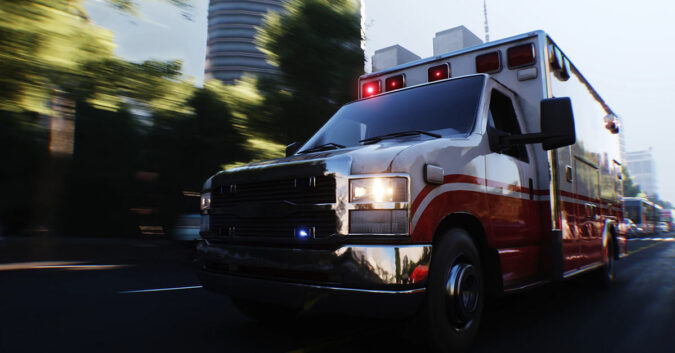
Ambulance chaser: If you've ever hired a personal injury lawyer or been one, you've heard the term before. What many families may not realize, however, is that behind a surprising number of the safety features you take for granted is an injured family, a lawsuit, and a company that had to be pushed to do the right thing.
Without a personal injury lawyer forcing companies to reveal what they know, so many everyday dangers of unsafe products would still be harming people today.
In 1994, the Association of Trial Lawyers of America (now the American Association for Justice) collected the most damning discovery documents ever pried loose from corporations — the internal memos, cost-benefit analyses, and quietly buried warnings that turned major trials. Trial lawyers call these the "smoking guns."
Each one was uncovered not by a regulator, not by a journalist, but by a victim's attorney using the one tool corporations can't stonewall forever: civil discovery.
In legal cases, discovery forces attorneys for both sides to turn over documents they may have otherwise kept hidden from regulators, their investors, and the public alike. It's a sworn obligation to hand over what's in the file, whether it helps you or hangs you.
These cases tell a single story, over and over: A company knew about a danger, calculated the cost of fixing it, and decided the math favored silence — until a lawsuit forced the truth into daylight, and the world got safer because someone sued.
Here are 18 smoking guns and the life-saving changes you benefit from every day without knowing a trial lawyer put them there.
1. Ford Pinto's Fuel Tank that Combusted
In 1971, Ford put defective Pintos on the road with a fuel tank that could rupture and catch fire in a low-speed rear-end collision. Ford knew — crash tests had failed, and the fix cost just $11 per car. An internal cost-benefit analysis weighed that fix against the projected payout for burn deaths, and chose the deaths.
Estimates of Pinto fire deaths range widely, from official tallies in the dozens to a Mother Jones investigation putting survivable burn deaths as high as 500 to 900.
In the case of Grimshaw v. Ford, a 1978 jury heard about the cost-benefit analysis — and awarded $2.5 Million in damages and a stunning $125 Million in punitive damages, the largest award in U.S. history at the time.
A judge cut the punitive portion to $3.5 Million, and an appeals court affirmed it in 1981, finding Ford had acted with conscious disregard for lives.
Ford recalled 1.5 million Pintos. Without the lawsuit that forced that memo into the record, the fix Ford had priced at a few dollars a car might never have come — and the "acceptable losses" on that spreadsheet would have kept burning.
2. AIDS & the Blood Supply
In the early 1980s, the treatment for hemophilia, clotting factor pooled from thousands of donors, became a vector for HIV. An internal memo shows a blood-products company already weighing warnings about AIDS transmission years before the industry told the public.
Instead of moving fast, the industry bought time. One memo described a task force as a delaying tactic against further testing. Of roughly 16,000 U.S. hemophiliacs, about half were infected with HIV before screening and heat-treatment became standard, with 90% of severe hemophilia patients getting sick. Thousands died.
In 1996, the four major manufacturers — Bayer's Cutter unit, Baxter, Armour, and Alpha — settled for $640 Million, covering about 7,000 infected hemophiliacs and their families.
Donor screening, mandatory HIV testing, and heat-treated products became the standard, and no U.S. factor product has transmitted HIV since 1987.
Without litigation to force those internal memos into daylight, the delay could have run longer — and the toll climbed higher.
3. Asbestos
Asbestos manufacturers knew their products were killing workers as far back as the 1930s — and hid the risk. A 1973 industry presentation laid it out coldly: The "bad news" was that workers were dying at an appalling rate. The "good news" was that the public didn't know, so sales could continue.
The projected toll was staggering — an estimated 200,000 to 300,000 deaths over two decades, with two million people already showing X-ray evidence of disease.
Facing more than 16,000 asbestos lawsuits, industry giant Johns Manville filed for bankruptcy in 1982. In 1988, the court established the first asbestos bankruptcy trust, funded with $2.5 Billion — the model dozens of later trusts would follow. It has since paid more than $5 Billion to over 1 million victims.
Today, an estimated $30 Billion is still available in asbestos trusts to help victims of these negligent companies. Over 60 companies have been forced to set aside money after bankruptcy due to banking on making cash off the harm caused to innocent Americans.
Asbestos was gradually regulated and phased out of American manufacturing, and exposure limits tightened, but the risks haven't entirely faded. Legacy asbestos exists in products today, and the carcinogen is still not entirely banned in the U.S.
That fight remains central to the work Sokolove Law has done for over 45 years. Our leading mesothelioma law firm has helped over 9,500 mesothelioma and asbestos exposure victims get justice, and each year, hundreds more families turn to us for help.
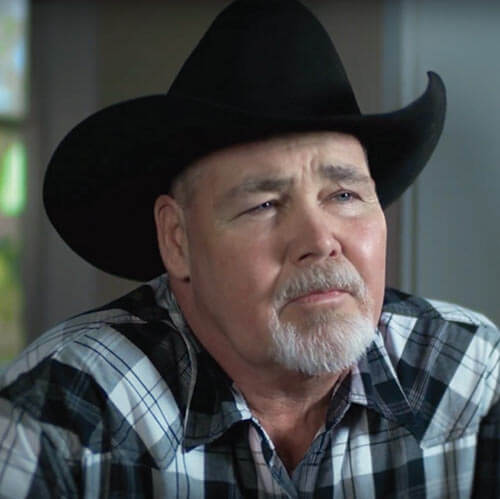
"Sometimes you get the wrong interpretation of lawyers and attorneys. They're good people, they're humans too. They're just trying to help."
– Bob, Sokolove Law Asbestos Exposure Client
4. Back-Up Alarms
That beep-beep-beep every time a truck reverses exists because people died without it. In 1974, a heavy-equipment maker's own lawyer warned that juries saw the missing back-up alarm as central to liability.
In fact, the company's own study found 54% of backing collisions could have been prevented by one. It didn't make them standard.
Lawsuits over backover deaths and injuries changed the math, moving alarms from optional to expected. Today they're standard equipment on construction and commercial machinery, required on job sites nationwide.
The most annoying sound on a job site is also one of its greatest lifesavers — and it took ambulance chaser lawyers to make it non-negotiable.
5. The Bjork-Shiley Heart Valve
The Bjork-Shiley heart valve was supposed to save lives. Instead, a metal strut inside it could snap without warning, and when it did, the patient usually died within minutes. The valve's own inventor flagged the defect in 1982, but the company's internal response was to "settle him down."
Roughly 86,000 of the valves were implanted worldwide. Hundreds of struts fractured, killing close to 300 patients. There was no way to tell which valves would fail, and the surgery to preemptively remove a working valve was itself dangerous and could kill you.
In the 1992 Bowling v. Shiley settlement, manufacturer Pfizer funded:
- The consultation fund of $90-140 Million paid for patients to get medical guidance about their own valve — to sit down with doctors, understand their individual risk, and decide whether removal made sense for them. It was money set aside so that every valve recipient could make an informed choice instead of just waiting and worrying.
- The research fund of $75 Million paid scientists to actually study the fracture problem — to try to figure out which valves were most likely to fail, so doctors could identify high-risk patients who'd genuinely benefit from surgery and spare everyone else an unnecessary, dangerous operation.
So the two funds together weren't really "damages" in the usual sense. They were the settlement trying to solve the problem the defective device created: help people understand their risk and fund the science to reduce it.
On top of that, Pfizer separately agreed to cover the medical costs of anyone who did need valve-related treatment. The valve came off the market, and the scandal became a landmark driver of stronger FDA device oversight.
6. 'Cherry Picker' Electrocutions
Electrical linemen were being burned, maimed, and killed by the very lifts meant to protect them. Concealed metal parts in the boom tip created a hidden electrical path that ran straight to the operator's control handle. The manufacturer had a name for it in its own files — "boom tip contact accidents" — before it had a fix.
Over 15 years, workplace injury attorneys represented lineman after lineman: severe electrical burns, multiple amputations, deaths. Litigation forced the redesign that isolated those components and eliminated the hidden path, and the lessons are now built into aerial-lift design and testing standards.
The lift a lineman climbs into today is engineered specifically against the failure that used to kill them — because lawsuits and ambulance chaser attorneys made the danger impossible to ignore.
7. The Cabinet Latch
Not every smoking gun involves a household name. In one finger-amputation case, a commercial cabinet maker was shown to have known about their defective latch a full 6 years before the injury.
One serious injury, one quiet product liability settlement, but the principle behind it powers this entire list: The duty to fix a known defect doesn't depend on how famous your product is.
Countless small design changes across American industry happen for exactly this reason — because manufacturers know a paper trail of ignored warnings will surface in discovery.
8. The Craftsman Brushwacker
Sears sold their Craftsman Brushwacker, a gas-powered brush cutter, from two different manufacturers. Their own 1980 catalog proved Sears knew the tool could kick back dangerously. One manufacturer had even added warnings and pictograms.
A Japanese supplier never put a kickback warning in their manual — and Sears never asked it to. Then a woman in Texas had her leg nearly severed when a Brushwacker her boyfriend was operating kicked back.
Sears knew about it. And Sears kept selling the tool, without adequate warnings, anyway. That gap is exactly what defective product lawsuits aim to close.
Craftsman Brushwacker lawsuits over kickback injuries are a big reason the power tool aisle is now blanketed in warnings, blade guards, and pictograms you can understand. Adequate warnings went from a competitive afterthought a company could skip to mandatory, despite manufacturers dragging their feet, because of juries.
9. The Dalkon Shield
The Dalkon Shield was sold to millions of women as a safe intrauterine device (IUD). It wasn't. Internal documents showed the maker knew its tail string could wick bacteria into the uterus and cause pelvic inflammatory disease, sterility, and death — but kept selling anyway.
An estimated 2 to 4 million women used it. It was linked to roughly 20 deaths and serious injuries like infections, infertility, miscarriages, and hysterectomies in an estimated 200,000 women.
Litigation drove the dangerous device off the market, forced a recall, and pushed manufacturer A.H. Robins into bankruptcy in 1985. The court-established Dalkon Shield Claimants Trust, funded with roughly $2.5 Billion, ultimately paid victims.
Without ambulance chaser lawyers, the device might have stayed on shelves far longer as the count of injured women climbed higher. They led the charge on modern medical device regulation.
10. E-Ferol
In 1983, two companies rushed an intravenous vitamin E product for premature infants to market without FDA approval or testing. Per the documents, the companies told their sales force to imply it was approved.
Ultimately, E-Ferol killed roughly 38 premature babies and injured many more with a liver damage syndrome doctors had never seen before. The product was pulled within months.
Unusually, executives were criminally prosecuted and convicted, and the disaster tightened FDA scrutiny of drugs marketed as new combinations of already-approved ingredients — closing the loophole the companies had slipped through.
11. Forklift Seat Belts
By the 1960s, forklift makers knew that operators were being crushed to death by their own machines' overhead guards during tip-overs. One company's own engineering rep recommended seat belts as early as 1965.
The industry waited. Operators kept dying, with tip-overs remaining among the leading causes of forklift deaths. Sustained litigation finally forced the reversal. Operator restraint systems became standard, manufacturers issued retrofit programs for older machines.
Buckling up on a lift truck while on the job is now as routine as buckling up in a car — a change that traces directly back to documents ambulance chaser attorneys pulled into court.
12. Exploding Glass Bottles
Glass soda bottles used to explode in people's hands. The dominant manufacturer held patents from the 1970s describing cheap coatings that would have contained the shards — solutions that existed on paper but never made it onto the shelf.
Product liability litigation over those injuries pushed the industry toward safer container design and, eventually, the broad shift to plastic and shatter-resistant packaging.
It's a quiet win you can measure in your own kitchen: A dropped 2-liter today is a mess, not a trip to the ER.
13. The Lidocaine Overdose
A 91-year-old woman died of a massive lidocaine overdose because the packaging made it dangerously easy to grab the wrong concentration.
The case produced a $10 Million wrongful death verdict and fed a much larger movement that reshaped how drugs are packaged:
- Clearer concentration labeling
- Distinct packaging for look-alike drugs
- The hospital medication safety protocols that now catch these mix-ups every day
One preventable death, one verdict, and a safer system for every patient who came after, thanks again to the ambulance chasers.
14. GM's 'Value Analysis' of Fuel-Fed Fires
Ford wasn't alone in doing the math. A General Motors "value analysis" ran the same grim calculation on fuel-fed fire deaths, pricing fatalities on a per-vehicle basis.
GM's own figures referenced roughly 500 such deaths a year. According to the documents, GM had decided to move a fuel tank to a safer spot over the axle — then, for some reason, reversed course.
Building on the Pinto precedent, fuel system litigation across the industry forced safer tank placement, better shielding, and the design standards that make a modern car far more survivable in a rear-end crash.
The GM memo, nearly identical in logic to Ford's, proved the Pinto wasn't a one-off. It was an industry habit — and only litigation broke it.
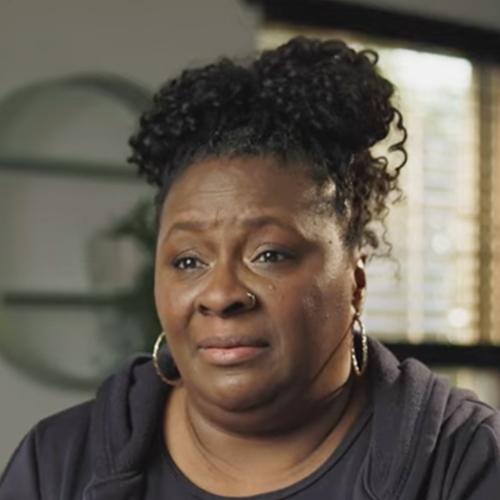
"My lawyer said this is what we do. We take on companies like this. We're not afraid to challenge them and to go to court. You have every right, and we're here to help you fight for your rights."
– Sha-nae, Sokolove Law Client
15. Multi-Piece Tire Rims
Multi-piece truck rims or "widow-makers" in the trade could explode with lethal force while being serviced and carried no warnings. A 1976 letter between two tire companies' attorneys urged holding off on planned warnings to avoid "embarrassing existing product cases."
One study counted 694 injuries from tire-and-wheel servicing between 1978 and 1987, 143 of them fatal, mostly from truck tires. The real number was likely much higher.
Litigation broke the silence, and the documented effort to suppress warnings helped drive federal action. OSHA's rim-servicing standard now requires specific procedures, restraining cages, and warning charts — and the dangerous design has largely given way to single-piece wheels.
Without ambulance chasers forcing that letter into the open, the industry's "don't embarrass each other" pact might have held.
16. The Polio Vaccine's Type III Problem
A 1977 quality control document showed a vaccine maker knew their Type III polio strain was itself causing polio in some who received the vaccine. Rather than obtain a safer seed strain — deemed too "expensive and time consuming" — the company worked to loosen the federal standard, so their product passed.
Vaccine-caused polio lawsuits helped push the U.S. toward the inactivated, injected polio vaccine, which can't cause the disease and is the only kind used here today. It also helped spur the 1986 National Vaccine Injury Compensation Program, a no-fault system that compensates the injured while protecting the vaccine supply.
The disease the vaccine prevents can no longer be caused by the vaccine itself — a fix dangerous drug lawyers helped force.
17. The Stud Gun That Stopped at the Franchise Line
In March 1986, the president of a national tool rental chain signed a memo recognizing the danger of high-velocity stud guns and ordering them off the shelves — but only at company-owned stores. Franchise locations never got the memo.
Thirty days later, a franchise rented one to an unlicensed carpenter. His errant nail passed through a wall and left a man a quadriplegic — 30 days after the company knew.
The case settled for more than $15 Million and accelerated the shift to low-velocity tools, mandatory operator training and licensing, and the rental restrictions that govern these tools today. The high-velocity design at the center of it is effectively gone from general circulation.
18. Theophylline
Theophylline was a mainstay asthma drug with a razor-thin margin between a healthy dose and a toxic one. An internal pharmaceutical memo helped trigger a national alert among trial lawyers about how easily patients were being pushed over that line.
The scrutiny that followed drove stronger monitoring and labeling requirements, and theophylline has since been largely replaced by safer inhaled therapies.
Sometimes the change litigation forces isn't a warning label. It's an entire generation of better medicine.
The Pattern Is the Point
Line these cases up and one thing becomes impossible to ignore: Not one of these dangers was fixed voluntarily. In every case, the company knew. In most, it was calculated. In several, it actively conspired to keep the public in the dark.
The fix came only when a lawyer for an injured person — an "ambulance chaser" — pulled the memo into open court, and a jury or a settlement forced a change no press release ever would have.
Add up just these cases, and you get billions of dollars returned to injured families and, more importantly, a long list of dangers designed out of American life for good: Fuel tanks moved, valves recalled, blood supplies tested, alarms mandated, warnings required, tools redesigned.
Why the World Needs Personal Injury Attorneys
Regulators matter. Journalists matter. But civil discovery is the only mechanism in American life that can compel a corporation to open their own filing cabinets under oath. That power belongs to injured people and the attorneys who represent them — and it has arguably saved more lives than any warning label ever printed.
So, the next time someone sneers about ambulance chasers, remember the seat belt on the forklift, the beep on the reversing truck, the guard on the brush cutter, the lack of asbestos in baby clothes all exist, in part, because somebody chased that ambulance all the way to the truth.

"Without ambulance chasers, there wouldn't be laws about children's car seats or bicycle helmets. Dangerous pharmaceutical drugs would continue to kill people if it weren't for us. And you have us ambulance chasers to thank for holding corporations accountable when they pollute the environment, causing birth defects and cancer."
– Jim Sokolove, Founder (Retired 2013)
If you or a loved one has been harmed by a dangerous product, drug, or exposure to asbestos, you may have the same power those victims did.
For over 45 years, Sokolove Law has helped injured clients understand their rights and pursue compensation. Get a free case review now to find out if we can fight for you.